End of One-Sided Economic Warfare: Will the Global South Seize the Moment?
Crescent International
Jumada' al-Akhirah 16, 1448 2026-11-26
Daily News Analysis

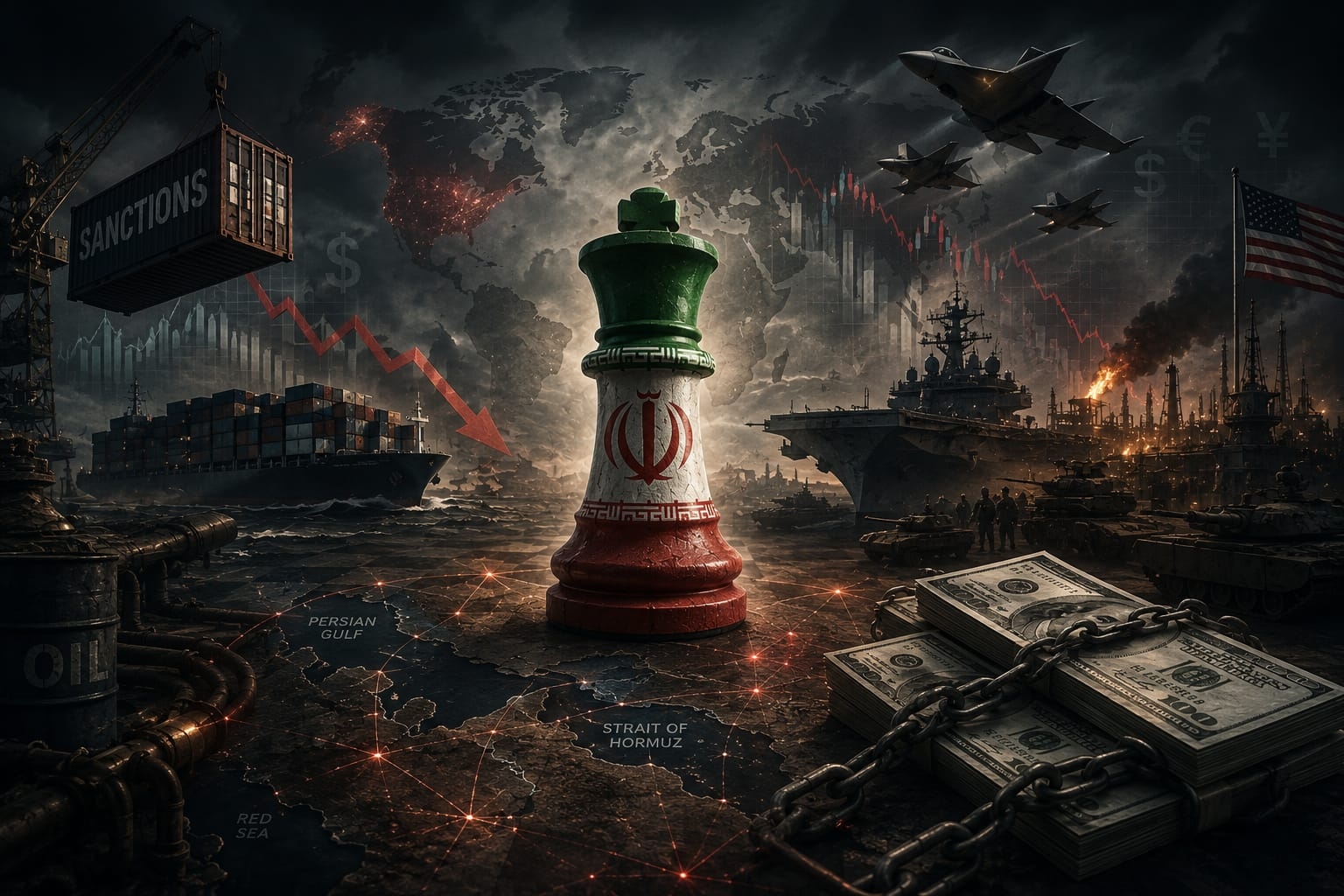
One of the most consequential transformations taking place in the world today is that economic warfare is no longer a one-way street.
For decades, western regimes have enjoyed an extraordinary advantage: the ability to weaponize their control over global economics and impose enormous costs on countries that challenge their geopolitical interests, often with little fear of retaliation.
That asymmetry is now rapidly changing.
The war against Islamic Iran has exposed an important reality: economic interdependence creates vulnerabilities not only for those targeted by western sanctions and coercive measures, but also for those who initiate them.
According to the International Energy Agency (IEA), confidence in the Hormuz Strait as a safe and reliable corridor for energy and other goods has been “crushed” for good.
Its executive director, Fatih Birol, stated that he sees no credible pathway back to the situation that existed before the aggression in February 2026.
In other words, Iran will now retain control over the world’s strategic trade route.
This is particularly significant because the consequences are not limited to temporary interruptions in oil and gas shipments.
The IEA estimates that developing alternative pipelines to bypass Hormuz would require approximately $40 billion, while another $200 billion would be needed to develop alternative energy sources outside the Middle East.
In other words, the disruption is forcing a fundamental reconsideration of the architecture of global energy trade.
Even if the Strait reopens and shipping resumes, the economic and strategic calculations of governments, investors and energy companies have already changed.
The financial repercussions are equally significant.
Rising oil prices, inflationary pressures and growing government borrowing costs are adding to the strains on western regimes.
The rise in US Treasury yields reflects a convergence of pressures: American public debt at $40 trillion, higher energy prices and inflationary risks, growing competition for investment capital from technology companies financing the AI boom, and the Federal Reserve’s plans to reduce its $6.6 trillion balance sheet.
Japan and other oil-importing economies also face mounting pressure to secure dollars to finance more expensive energy imports, potentially forcing them to liquidate foreign bond holdings, adding further selling pressure to government debt markets.
The implications for Washington are substantial: approximately 45% of US debt matures within five years, while a two-percentage-point increase in borrowing costs could add an estimated $350 billion annually to federal interest payments alone.
These developments expose the vulnerability of western financial systems to geopolitical and economic disruptions which are beyond their control.
This is the fundamental game changer.
Countries that were previously treated as hapless recipients of western economic coercion increasingly possess strategic assets, geographical positions, resources and commercial leverage through which they can impose costs on others.
Energy supplies, maritime chokepoints, critical commodities and alternative trade corridors are not merely economic considerations; they are instruments of geopolitical influence.
The assumption that the west can dictate the terms of economic engagement without exposing itself to counterpressure is no longer valid.
The greatest opportunity created by this transformation belongs to the Global South.
The question is whether these countries possess the political will and institutional capacity to translate their collective economic weight into practical alternatives.
It is not enough to denounce western sanctions, criticize dollar dominance or advocate a multipolar international order.
What is required is the rapid establishment of functioning mechanisms for trade settlement, financial cooperation, investment, insurance, shipping, energy security and cross-border payments.
Political declarations without operational infrastructure will achieve little.
This requires something equally important: a political class that is no longer intellectually and politically married to the assumption that western institutions, financial infrastructure and geopolitical leadership must remain the organising principles of the international system.
The Global South cannot construct an alternative economic architecture while its political elites continue to regard the western world as the indispensable centre around which everything else must revolve.
The opportunity is historic, but it is not unlimited.
The longer countries of the Global South take to establish practical alternatives, the greater the likelihood that the emerging economic fragmentation will be shaped by competing power centres rather than by a coordinated effort to create a more balanced international trading system.
The objective should not simply be to replace one form of dependence with another, but to establish genuine economic autonomy and diversified international cooperation.
The old system is being challenged not merely by political opposition, but by the economic consequences of its own hubris.
Western regimes are discovering that economic interdependence cuts both ways.
Economic warfare is no longer a one-way street.
The question now is whether the Global South will seize this moment to build an alternative, or once again allow a historic opportunity to pass it by.
Related Articles

Washington’s free-trade narrative suffers setbacks on home turf
Crescent International
Jumada' al-Akhirah 27, 1442 2021-02-09
Developing Economies Likely to Do Better in a Multipolar World Order
Crescent International
Shawwal 04, 1443 2022-05-05
Will the Chinese yuan replace the US dollar as dominant global currency?
Crescent International
Safar 14, 1444 2022-09-10