From Edward Said’s Orientalism to the Epstein Files: How the West’s Moral Narrative Imploded
Javed Akbar
Sha'ban 20, 1447 2026-02-08
Daily News Analysis

by Javed Akbar
From the intellectual distortions exposed by Edward Said in his seminal work, Orientalism, to the moral rot revealed by Jeffrey Epstein, the west’s carefully crafted image of virtue has finally collapsed.
Professor Said (1935-2003) dismantled the intellectual framework through which the west distorted Islam and Muslim societies.
A Palestinian-American scholar, Said was a game changer in how the modern world came to understand culture, identity, and power, exposing how knowledge itself could be weaponized in service of domination.
He demonstrated that “the Orient” (the East, including the Middle East, Asia, and North Africa) was not an objective reality discovered by scholars, but a constructed fiction—a mirror in which Europe projected its fears, fantasies, and sense of superiority.
Muslims were portrayed as irrational, sensual, backward, and in need of western control, while Europe cast itself as rational, moral, and civilized.
Said’s critique was devastating: these portrayals were not innocent academic errors but tools of power.
They justified colonial domination, cultural arrogance, and political intervention.
By reducing entire civilizations to caricatures, the west concealed its own moral contradictions and historical violence.
Orientalism, he argued, was less about understanding Islam than about maintaining western supremacy.
Fast forward to our own time, and history has delivered a bitter irony.
While Muslims were relentlessly depicted as morally suspect and culturally regressive, the west’s own elite—the very class claiming moral authority—now stands exposed.
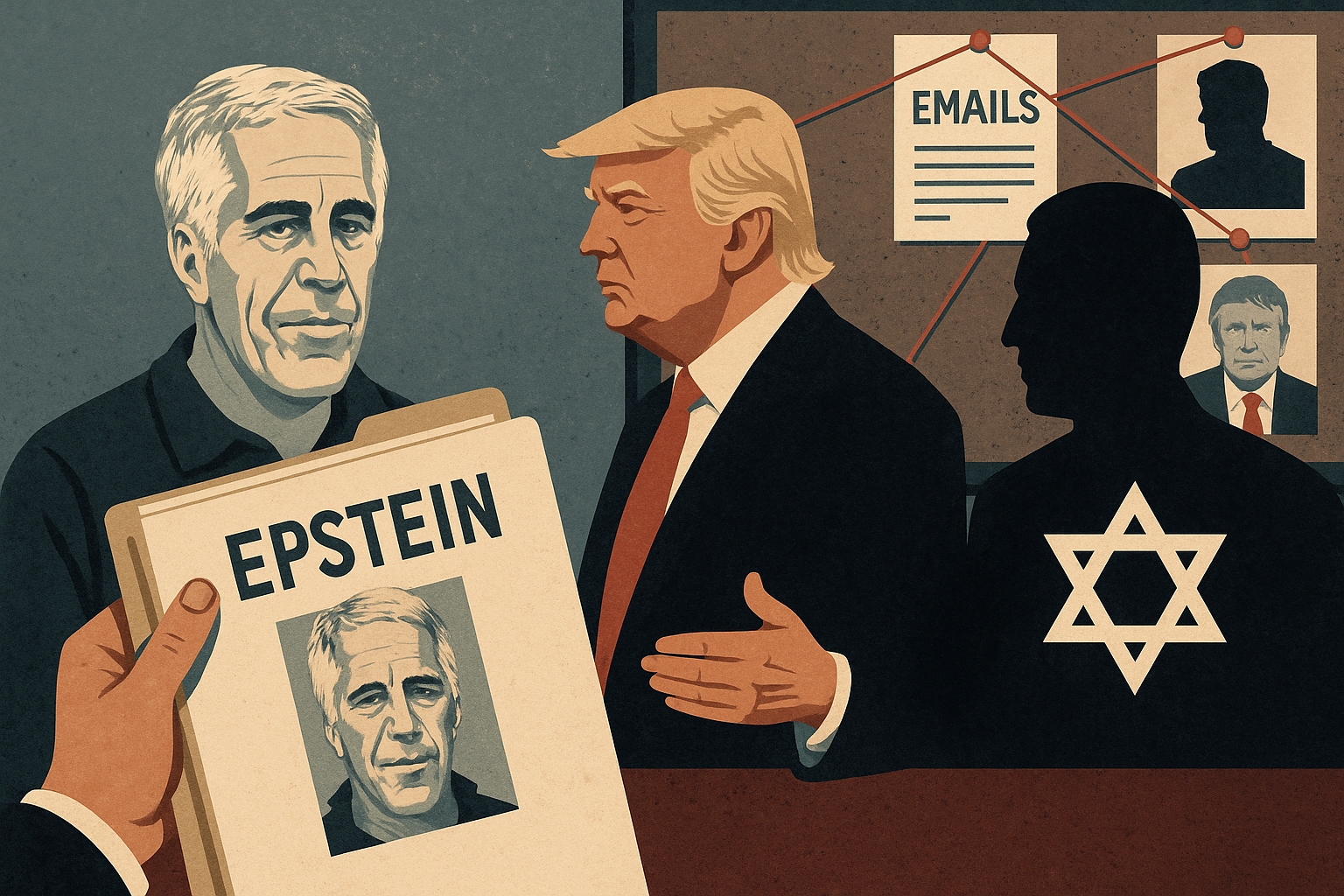
The revelations surrounding Epstein tore away the polished façade of respectability.
What emerged was not merely the scandal of one criminal, but the anatomy of a protected system where wealth, power, and influence converged to shield predators.
Young girls were trafficked, groomed, abused, and silenced—not in some distant “uncivilized” land, but at the heart of western power.
Private jets, luxury mansions, secret islands, and legal cover-ups formed the infrastructure of this moral rot.
Money bought access; influence bought silence; power bought immunity.
Here lies the profound counterpoint to Orientalism.
For centuries, the west portrayed Muslim societies as sexually deviant and morally deficient.
Yet it is within the highest circles of western wealth and influence that we now witness organized predation—systematic, calculated, and protected by institutions meant to uphold justice.
Said exposed how the west invented a distorted image of Islam to assert dominance.
The Epstein revelations expose something even more unsettling: while preaching virtue to the world, the west’s elite cultivated exploitation beneath its refined surface.
Islamic teachings emphasize modesty, accountability, and the protection of the vulnerable.
Yet Muslims were framed as threats to civilization.
Meanwhile, the architects of global finance, politics, and media—those who lectured others on human rights—were complicit in crimes that stripped humanity of its dignity.
Orientalism was about controlling the narrative.
The Epstein revelations are about losing control of it.
Together, they reveal a striking truth: the moral hierarchy the west constructed was never grounded in virtue, but in power.
When power speaks, it claims righteousness.
When power is exposed, its hypocrisy stands naked.
The Epstein files revealed a grotesque system operating at the summit of society.
Flight logs, sealed settlements, and lenient plea deals showed how deeply justice bent before wealth.
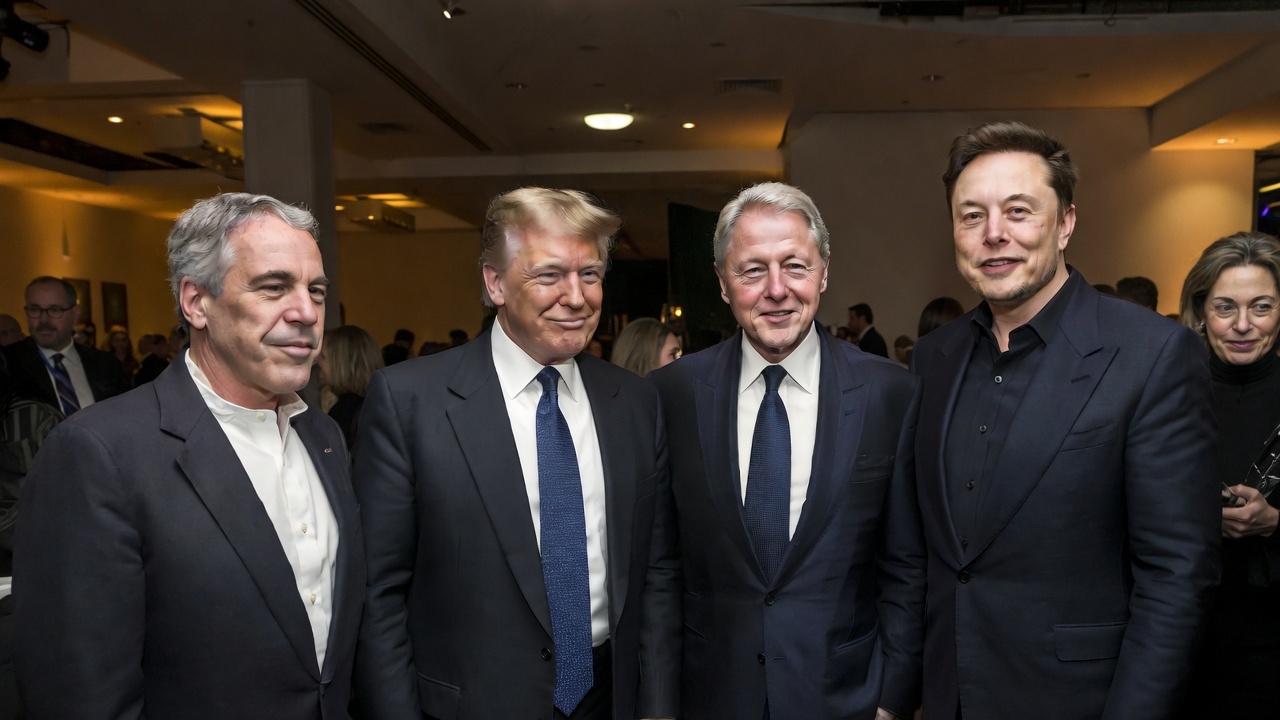
Epstein was not an outcast—he was embedded among presidents, princes, billionaires, and celebrities.
Private planes—chillingly dubbed the “Lolita Express”—transported underage girls to luxury estates and a private island designed for secrecy.
Victims later testified to being passed among powerful men like commodities.
Some were barely teenagers.
For years, nothing happened.
Complaints vanished. Investigations stalled.
Prosecutors offered astonishing leniency.
The machinery of justice—so ruthless toward the powerless—became inexplicably gentle toward the ultra-rich.
This was not incompetence.
It was complicity.
Even Epstein’s eventual death in federal custody under suspiciously negligent conditions silenced the man who could have named names.
Yet the documents endured, confirming an elite culture of abuse protected by privilege.
This is the collapse of the west’s moral theater.
For decades, western institutions portrayed Muslim societies as backward, oppressive, and ethically flawed, while presenting themselves as guardians of human rights and dignity.
Yet behind gated mansions and private islands, the west’s most powerful men engineered an industrial-scale system of sexual exploitation.
Not driven by poverty; not hidden in shadows, but curated in luxury.
The Epstein revelations do not expose desperation-driven crime. They expose luxury-driven depravity.
They reveal a culture where everything—bodies, silence, justice — has a price.
And the buyers were the very men who shaped global policy, controlled media narratives, and lectured the world about morality.
What Orientalism once did intellectually—distorting others to elevate the west—the Epstein files have undone morally.
The illusion of civilizational superiority has collapsed.
The mask has fallen.
The “barbarism” long projected onto Muslims and non-western societies has been found thriving in penthouses and palaces.
Edward Said warned that power constructs narratives to hide its own violence.
The Epstein saga proves it.
For years, the west distracted the world with tales of the “immorality” of others—while its own ruling class perfected exploitation behind closed doors.
Now the story has turned inward.
And what it reveals is not moral leadership, but moral bankruptcy.
Javed Akbar is a freelance writer with published works in the Toronto Star and across diverse digital platforms. He can be reached at: mjavedakbar@gmail.com
Orientalism: First published in 1978 by Pantheon Books. Republished several times, the last one in 2014. Considered as among the top 100 Books of the 20th century. Widely regarded as a foundational text /Canonical Text in postcolonial studies, cultural criticism, and Middle Eastern studies.
Edward Said: Born in Jerusalem, Professor of English and Comparative literature at Columbia University. (1963-2003). Regarded as one of the most influential American public intellectuals of the 20th century, in the world of literature and politics. Author of: Orientalism, Cultural Imperialism, The Question of Palestine, Covering Islam.
Related Articles

Epstein Files Not a Simple Scandal; It’s the Implosion of the Western Imperial Machine
Crescent International
Sha'ban 27, 1447 2026-02-15