Scholars urge unity at Tehran International Islamic Unity Conference
Crescent International
Rabi' al-Awwal 16, 1448 2026-08-29
Daily News Analysis

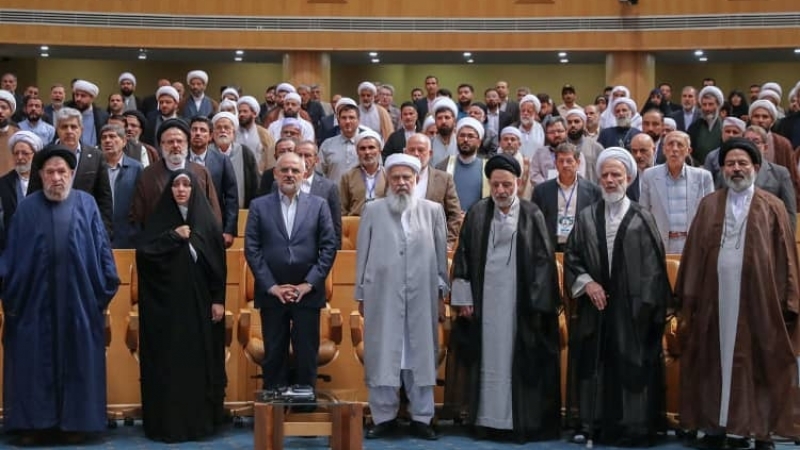
At the 40th International Islamic Unity Conference in Tehran (August 27-30), ulama, academics and activists from around the world issued a strong call for Muslim unity.
In the opening session on August 27, President Masoud Pezeshkian and Secretary General of Majma at-Taqrib Shaykh Hamid Shariari had addressed the conference (See the report in Crescent International).
Below are the statements of some of the other leading participants.
Dr. Liaqat Baloch, Deputy Emir of Jama‘at-e Islami Pakistan, said unity was not merely a matter of temporary expediency, but a Qur’anic obligation and a Prophetic tradition.
He emphasized the necessity of respecting religious sanctities and the prohibition of insulting them—citing, in particular, the historic fatwa issued by the martyred leader Imam Khamenei.
He also welcomed the recent defense agreement between Saudi Arabia, Pakistan, and Turkiye, proposing that Iran also participate within this framework to realize a unified defense against colonialism.
Mahmut Arol Kilic, Professor at the University of Islamic Sufism in Turkey, said: “Today, the Islamic Ummah is in its most sensitive period, and this division that has arisen has caused Muslims to act against each other, and we are witnessing genocide and fratricide.”
He added: “The zionist regime has never adhered to any principles in history and has always sought to take away the Islamic identity from the Islamic Ummah.”
He noted that “the lack of attention paid by Muslims to the teachings of the Qur’an and the Prophet (ﷺ) has caused us to experience this division. It is the duty of all Muslims to create unity among all Islamic sects and eliminate this division. We must seek peace and tolerance and must never allow division and disagreement to become more widespread…”
Sheikh Mansour Mandour, a scholar from Egypt’s Al-Azhar, described division as a dreadful affliction plaguing the Ummah, and citing the verse “Hold fast to the rope of Allah,” he emphasized the necessity of abandoning futile disputes.
He stated that internal discord has enabled our enemies to gain dominance over Palestine, Iran, and other Islamic lands, and that only a return to the path of Islam and unity can save the Ummah.
Sheikh Saleh bin Hamouda, Minister of Cultural Reconstruction and Social Values of Niger, said that Allah has repeatedly mentioned and emphasized unity among Muslims in numerous verses of the noble Qur’an. From the perspective of God Almighty, the Islamic Ummah is the best society and is worthy of managing the Islamic world.
It is obligatory for all Muslims to gather around a single axis and follow the path of our beloved Prophet (ﷺ). Other verses of the noble Qur’an state that Muslims should act beyond all these issues and remain brothers to each other, regardless of skin color, language, ethnicity, etc.
He stated: “We in Niger witnessed all the events that happened to the Muslim people of the Islamic Republic of Iran and witnessed the struggle of the Mujahideen and the leaders of this Islamic country.”
The Minister concluded by emphasizing that the best society that can reach the peak of prosperity is the one that maintains its Islamic unity and cohesion.
Sheikh Maher Hammoud, head of the International Union of Resistance Scholars (based in Lebanon), described the martyrdom of the late leader as a matter of divine decree and emphasized the religious obligation to support the Islamic Republic against American-zionist plots.
Referring to the late leader’s 1981 remarks regarding the goals of the Revolution, he stated that the leader remained hopeful for the victory of Islamic movements until his final moments, and that the Ummah’s unified political stance today is the fruit of those very efforts.
Kamal Gharavi, a Sunni representative in the Assembly of Experts, cited the epic, six-month-long presence of diverse Shia and Sunni groups following the martyrdom of the “martyred leader” as a testament to the depth of the concept of unity in Iran.
He emphasized the necessity of solidarity centered on shared values—namely, Tawhid and the interests of the Islamic world. He identified Quds Day and the Resistance Front as tangible manifestations of this unity.
Molavi Ishaq Madani, Head of the Supreme Council of the World Forum for Proximity of Islamic Schools of Thought, addressed the roots of discord within the Islamic world and emphasized the rejection of the allegation that Shi‘as believe the Qur’an has been distorted.
He stated that wherever Shi‘as reside today, they recite the same Qur’an as Sunni Muslims, and there is no difference among the sects regarding the text of the Qur’an itself.
He also dismissed claims that Sunnis lack regard for the Ahl al-Bayt (AS) as baseless; pointing to the practice of invoking blessings upon the Prophet’s family during Sunni prayers. He stressed that the enemies propagate such allegations in an attempt to sow division within the Islamic Ummah.
Sheikh Hussein Qasim, head of the Council of Palestinian Scholars, recalling the historic “Hilf al-Fudul” (Alliance of Virtues) pact from the pre-Islamic era—in which the Prophet (ﷺ) also participated—stated: “Today, the Muslim Ummah needs a similar pact to stand against the aggressions of the United States and the zionist regime targeting Gaza, Lebanon, Iran, Yemen, Syria, and Iraq, and to defend the oppressed everywhere in the world.”
Sheikhna Longabo, Director of the Sheikh Ibrahim Institute for Islamic Education in Senegal, outlined the conceptual framework of unity held by the martyred leader, stating that unity does not mean compromising one’s beliefs. Rather, each school of thought retains its own scholarly authority without turning those beliefs into a tool for discord or aggression.
He cited the fatwa prohibiting insults against Sunni sanctities as a step toward elevating respect from mere social pleasantry to a religious obligation.
Maulana Shahid-ul-Islam, head of the Rajshahi Dar-us-Salam seminary in Bangladesh, cited the Qur’anic verse regarding obedience to those in authority and the Hadith of the Two Weighty Things (Hadith al-Thaqalayn) to attribute the current weakness of the Ummah to disunity.
He stated that had the differences between Shi‘a and Sunni Muslims been set aside, the United States would not have been able to dominate the Arab world.
He emphasized the necessity of unity—despite existing differences—as a Qur’anic obligation.
Vahidullah Sabawun, leader of the United Islamic Party of Afghanistan, while acknowledging the martyred leader’s long-standing efforts to organize Islamic unity initiatives, emphasized the need to continue this path following his martyrdom, stating: “The responsibility for unity did not end with his martyrdom, and his successor must carry on this path.”
Sheikh Ghazi Haneineh, Head of the Board of Trustees of the Lebanese Muslim Scholars’ Assembly, citing the example of the Prophet (ﷺ) and the Ahl al-Bayt (عَلَیْهِ السَّلَام) in championing unity, stated: “The martyred leader departed to meet his Lord with the Palestinian keffiyeh around his neck, entrusting the cause of unity to scholars, thinkers, and politicians.”
He described unity—in addition to faith in Allah—as the most powerful weapon against the American and zionist enemy, and characterized the six-month steadfastness of the Iranian people as a source of astonishment that led to the failure of the enemy’s schemes.
Mamosta Iqbal Bahmani, the representative of Kurdistan Province in the Assembly of Experts, referred to the martyred Leader’s historic fatwa prohibiting insults against the wives and Companions of the Prophet (ﷺ), as well as his practical initiative to broadcast the Sunni call to prayer in Kurdistan.
He stated that the martyred Leader viewed unity as a prerequisite for advancing toward a new Islamic civilization and a unified Ummah, and that he would intervene directly whenever he perceived the potential for discord.
Professor Amal al-Husseini, an Iraqi academic, described the concept of unity in the thought of the martyred leader as possessing two dimensions—a Qur’anic obligation and a strategic perspective—and characterized the fatwa prohibiting insults against Sunni sanctities as an impenetrable barrier against the sowing of discord.
She also emphasized the necessity of insight regarding Takfiri movements, “London-based Shi‘ism,” and “American-style Sunnism,” as well as the role of Palestine as the paramount unifying factor.
Pir Shafat Rasool, head of the Bilal Center in Lahore, Pakistan, offered condolences on the martyrdom of the late leader, hailing him as a great leader and a distinguished Mujtahid. He highlighted the leader’s practical recommendations to Shi‘a Muslims—such as performing congregational prayers alongside Sunni Muslims during Hajj and observing Unity Week (12th to 17th of Rabi‘ al-Awwal)—and noted that his support for the oppressed people of Palestine and Lebanon, irrespective of religious affiliation, was a manifestation of his approach centered on unity.
Related Articles
International Islamic Unity Conference opens in Tehran
Crescent International
Rabi' al-Awwal 14, 1448 2026-08-27
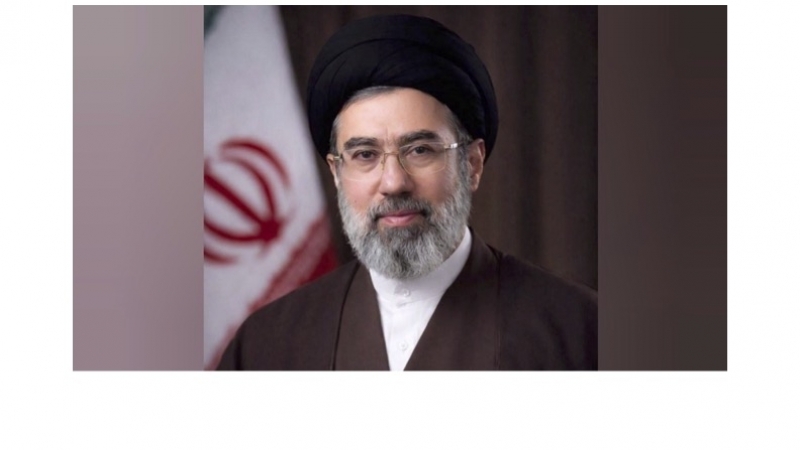
Ayatullah Seyyed Mojtaba Khamenei elected Leader of Iran by the Assembly of Experts
Crescent International
Ramadan 18, 1447 2026-03-08