The Contemporary Zionist Threat To Al-Masjid Al-Aqsa
Empowering Weak & OppressedMohamed Ousman
Dhu al-Qa'dah 13, 1447 2026-05-01
News & Analysis

by Mohamed Ousman (News & Analysis, Crescent International Vol. 56, No. 3, Dhu al-Qa'dah, 1447)
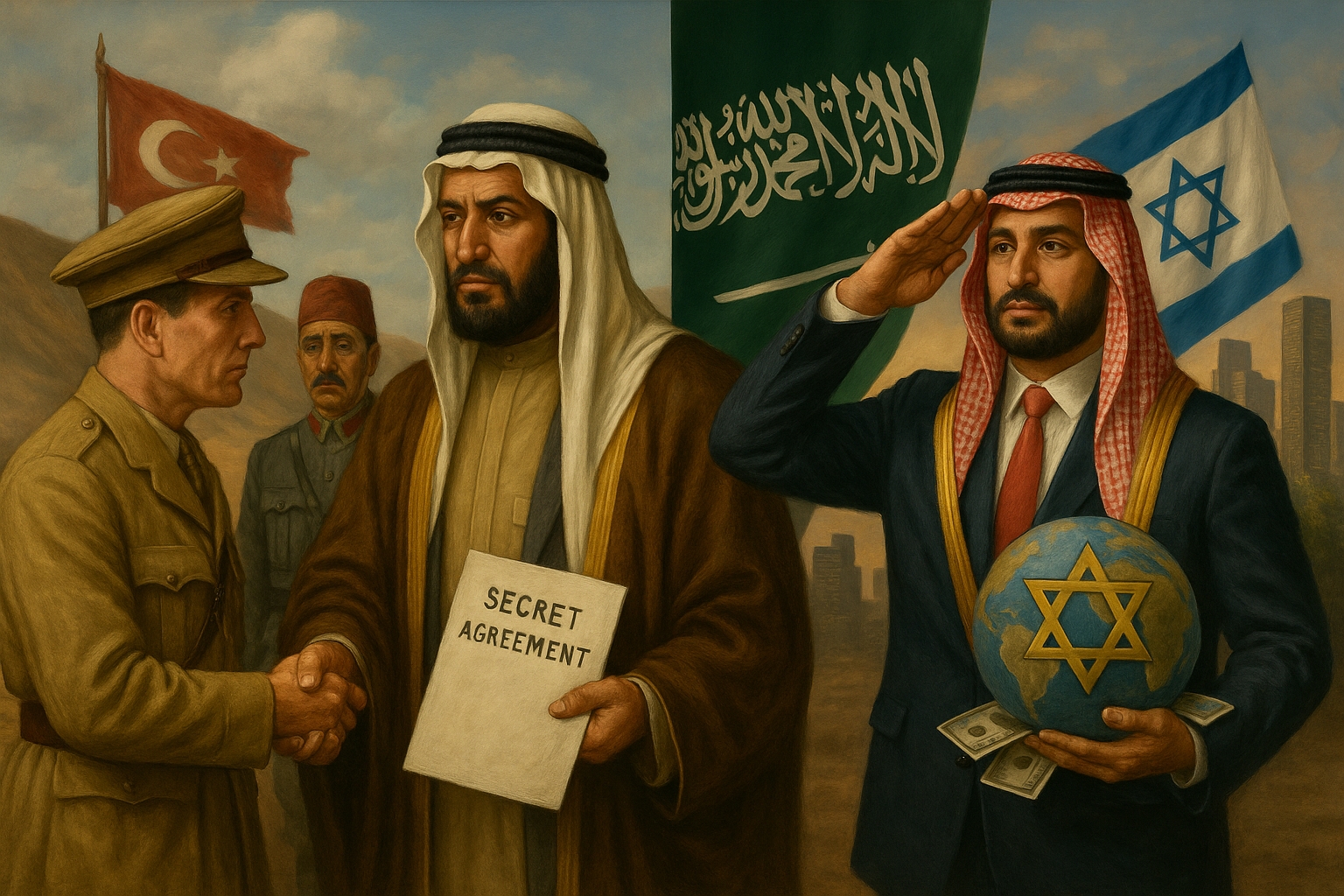
Al-Masjid Al-Aqsa in Holy Land north occupies a central place in Islamic consciousness, not merely as a sacred site but as a symbol of justice, unity and divine trust. The zionist Israeli Jewish project in Holy Land north represents more than a territorial dispute; it reflects a deeper contest over identity, sovereignty and historical narrative.
The ongoing encroachments, administrative controls and attempts to alter the status quo of Holy Land north must be analyzed within a broader framework that includes both external pressures and internal Muslim dynamics.
Between 2024 and 2026, a series of zionist Israeli Jewish actions have significantly intensified the threat to Al-Masjid Al-Aqsa.
- Repeated settler incursions: Over 65,000 Israeli settlers entered Al-Masjid Al-Aqsa compound in 2025 alone, escalating normalization of non-Muslim control.
- Storming by officials: Far-right minister Itamar Ben-Gvir repeatedly entered and prayed at Al-Masjid Al-Aqsa site, challenging the status quo.
- Attempts at ritual sacrifice: Zionist Israeli Jewish groups tried performing Passover animal sacrifices inside Al-Masjid Al-Aqsa compound.
- Restrictions on Muslim presence: Limits on attendance during Ramadan and bans on entry to Al-Masjid Al-Aqsa for thousands of Muslims.
- Closure policies: Temporary full closures and selective access control to Al-Masjid Al-Aqsa imposed by Israeli authorities on Muslims.
- Zionist security violence: Beatings and force used against Muslims attempting to access Al-Masjid Al-Aqsa.
- Status quo erosion: Collapse of long-standing agreement allowing only Muslims to pray at Al-Masjid Al-Aqsa site.
- Increased Jewish prayer activity: Growing zionist Israeli Jewish official support for Jewish rituals inside Al-Masjid Al-Aqsa compound.
- Symbolic sovereignty moves: Statements advocating building a synagogue or temple on Al-Masjid Al-Aqsa site.
- Arrests of Islamic staff: Detention of Islamic authorities managing and maintaining to Al-Masjid Al-Aqsa compound.
Together, these actions indicate a systematic shift toward altering control, access and ultimately the religious character of Al-Masjid Al-Aqsa.
The contemporary zionist threat to Al-Masjid Al-Aqsa must be examined through a Qur’anic paradigm, Prophetic precedent and Islamic movement theory. Drawing on modern Muslim political realities, the struggle over Al-Masjid Al-Aqsa cannot be understood in isolation from broader questions of authority, legitimacy and internal fragmentation within the Muslim world, particularly fragmentation along sectarian, national and ideological lines.
The contemporary zionist threat to Al-Masjid Al-Aqsa must be situated within a continuum of historical confrontation, emphasizing the necessity of moral, political and civilizational coherence among Muslims as a prerequisite for the liberation of Al-Masjid Al-Aqsa.
Historical and Political Context
The zionist Israeli Jewish presence in Holy Land north has evolved from colonial settlement to a consolidated colonial nation-state project, characterized by legal, military and symbolic domination. Policies restricting access to Al-Masjid Al-Aqsa, facilitating colonialist incursions and promoting narratives of exclusive Jewish sovereignty over Al-Masjid Al-Aqsa are part of a systematic strategy aimed at transforming both the physical and symbolic landscape.
However, focusing solely on external actors obscures a critical dimension: the internal disunity and political paralysis within the Muslim world. Many Muslim-majority states maintain diplomatic or covert relations with the zionist entity, while others are constrained by geopolitical dependencies. This condition raises fundamental questions about agency, legitimacy and the capacity for collective action.
The zionist Israeli Jewish Project: Beyond Territorial
The zionist Israeli Jewish threat to Al-Masjid Al-Aqsa is not limited to physical control. It encompasses a broader attempt to redefine the historical and religious significance of the site. Narratives advocating for the reconstruction of the so-called Temple mount directly challenge the Islamic identity of Al-Masjid Al-Aqsa.
These efforts are supported by global networks, including political, financial and ideological structures that extend beyond the immediate region. The result is a multilayered challenge that requires an equally comprehensive response.
The Qur’anic Paradigm: Moral Agency and Historical Recurrence
The Qur’an presents history as a moral continuum governed by divine principles rather than random events. The description of ibadan lana (“servants belonging honorably and exclusively to Us (meaning Allah)”) signifies a category of quality individuals defined not by ethnicity, sect or nationality, but by their alignment with divine will for justice.
Within this framework, the cycles of corruption and accountability described in Surah al-Isra suggest that periods of dominance by unjust forces are temporary and contingent upon the moral state of the Muslims. The implication is that the current zionist ascendancy is not merely a function of military or political strength but also a reflection of internal weakness within the Muslim community.
This perspective challenges reductionist analyses that attribute the crisis solely to external enemies, instead emphasizing the necessity of simultaneous internal reform and ethical coherence.
Imam Muhammad Al-Asi’s Qur’anic Framework
Al-Asi’s interpretive approach emphasizes the dynamic and action-oriented nature of the Qur’an. Central to his framework is the concept of ibadan lana, which redefines agency in terms of divine alignment rather than sociopolitical identity. In the context of Holy Land north, this suggests that liberation is not the product of conventional power structures but of a divinely grounded community.
Al-Asi interprets Surah al-Isra as outlining recurring patterns in history, where corruption leads to divine intervention through committed individuals. The current zionist dominance is thus viewed as part of a second cycle, paralleling earlier periods of corruption attributed to Bani Isra’il. This interpretation places responsibility on Muslims to embody the qualities necessary to become instruments of change, viz. servants belonging honorably and exclusively to Allah.
Importantly, Al-Asi rejects sectarian categorizations, arguing that such divisions are antithetical to the Qur’anic vision. The emphasis on unity under divine guidance challenges contemporary Muslims to reassess their priorities and transcend superficial identifiers.
In this framework, the liberation of al-Aqsa is contingent upon the transformation of the Muslim community into a cohesive moral force, ibadan lana (“servants belonging honorably and exclusively to Us”). External confrontation without internal coherence is deemed insufficient.
Seerah as Strategic Blueprint
The Prophetic model offers a strategic sequence that is often overlooked in contemporary discourse. The liberation of Makkah preceded the eventual opening of Al-Quds (Jerusalem) under the leadership of the early Muslim community. This sequence underscores the importance of establishing a just and unified center to engage in broader geopolitical struggles.
The Prophet’s approach was not reactionary but methodical, prioritizing the construction of a cohesive community grounded in shared values. The battles against larger empires were undertaken only after this foundation had been secured.
Applying this model to the present suggests that efforts to liberate Holy Land north must be preceded by a reordering of priorities within the Muslim world, including addressing issues of governance, legitimacy and unity.
Imam Zafar Bangash’s Seerah Framework
Bangash’s approach to the seerah highlights its relevance as a guide for contemporary political action. He emphasizes the strategic sequencing in the Prophet’s mission, particularly the prioritization of internal consolidation before external engagement.
Applying this to Holy Land north, Bangash would argue that the current focus on immediate liberation efforts overlooks the necessity of establishing a just and unified base and liberating Makkah. The Prophet’s success was rooted in his ability to build a community that transcended tribal and ethnic divisions.
Bangash also underscores the importance of leadership that reflects Islamic principles in both form and substance. The leadership in the Islamic Republic of Iran’s isolation or the absence of it being widely endorsed by the contemporary Muslim world is identified as a major obstacle to progress.
Internal Fragmentation and Its Consequences
One of the most significant obstacles to addressing the crisis of Holy Land north is the prevalence of sectarianism and nationalism. These divisions dilute collective energy and redirect focus toward internal disputes rather than shared objectives.
The framing of identity along Sunni-Shi‘i lines, or along ethnic and national boundaries, stands in contrast to the Qur’anic emphasis on a unified ummah. This fragmentation not only weakens political leverage but also undermines the moral authority necessary to confront injustice.
Moreover, the prioritization of ritual over substance—evaluating leadership based on outward religiosity rather than policy and action—contributes to a state of political complacency.
Dr. Kalim Siddiqui’s Islamic Movement Theory
Siddiqui’s theory centers on the concept of the Islamic movement as a vehicle for systemic change. He argues that the decline of the ummah is linked to the loss of authentic political authority rooted in Islamic values.
In the context of Holy Land north and Al-Masjid Al-Aqsa, Siddiqui would interpret the zionist threat as a symptom of a broader crisis of governance. The fragmentation of the Muslim world into nation-states has led to the erosion of collective capacity.
Siddiqui emphasizes the need for a global Islamic movement that operates beyond national boundaries, united by a shared vision. Such a movement would be capable of addressing both internal and external challenges in a coordinated manner.
Toward a Framework of Response
The threat to Al-Masjid Al-Aqsa cannot be adequately addressed through isolated political or military measures. It requires a comprehensive re-evaluation of the Muslim condition, informed by Qur’anic principles, Prophetic precedent and coherent movement theory.
The path forward lies not only in confronting external forces but in cultivating the internal qualities necessary for meaningful and lasting change. Only then can the aspiration for justice in Holy Land north move from rhetoric to reality.
A meaningful response to the threat against Holy Land north and Al-Masjid Al-Aqsa must integrate three key elements:
- Moral Renewal: rebuilding the ethical foundations of Muslim societies.
- Political independence: Reducing reliance on external powers that constrain decision-making.
- Unity of Purpose: transcending sectarian and national divisions.
Without these elements, ibadan lana (“servants belonging honorably and exclusively to Us (meaning Allah)”) will not be actualized and any attempt to address the crisis in Holy Land north and Al-Masjid Al-Aqsa, will remain superficial and ultimately ineffective.
Bibliography
Al-Āsī, Muhammad: The Ascendant Qur’an: Realigning Man to the Divine Power Culture. Various Volumes. Institute of Contemporary Islamic Thought, (2008-2024).
Bangash, Zafar: In Pursuit of the Power of Islam: Major Writings of Kalim Siddiqui. Toronto: The Open Press (1996).
Bangash, Zafar: Power Manifestations of the Sirah. Toronto: ICIT. (2011).
Bangash, Zafar: Editorial introduction to Siddiqui’s collected works
Bangash, Zafar: Articles in Crescent International (various issues)
https://crescent.icit-digital.org/articles/power-dimensions-in-the-sirah-of-the-noble-messenger-saws
https://crescent.icit-digital.org/articles/the-importance-of-re-examining-the-seerah-of-the-prophet
Siddiqui, Kalim: The Islamic Movement: A Systems Approach. London: The Muslim Institute, (1976).
Siddiqui, Kalim: Issues in the Islamic Movement. Toronto: The Open Press (1982).
Siddiqui, Kalim: Beyond the Muslim Nation-State. The Muslim Institute (1977).
Siddiqui, Kalim: Stages of Islamic Revolution. London: The Open Press, (1996).
Related Articles