The UAE Boycott campaign and Its Implications for US, Israel
Empowering Weak & OppressedCrescent International
Jumada' al-Akhirah 11, 1447 2025-12-02
Daily News Analysis

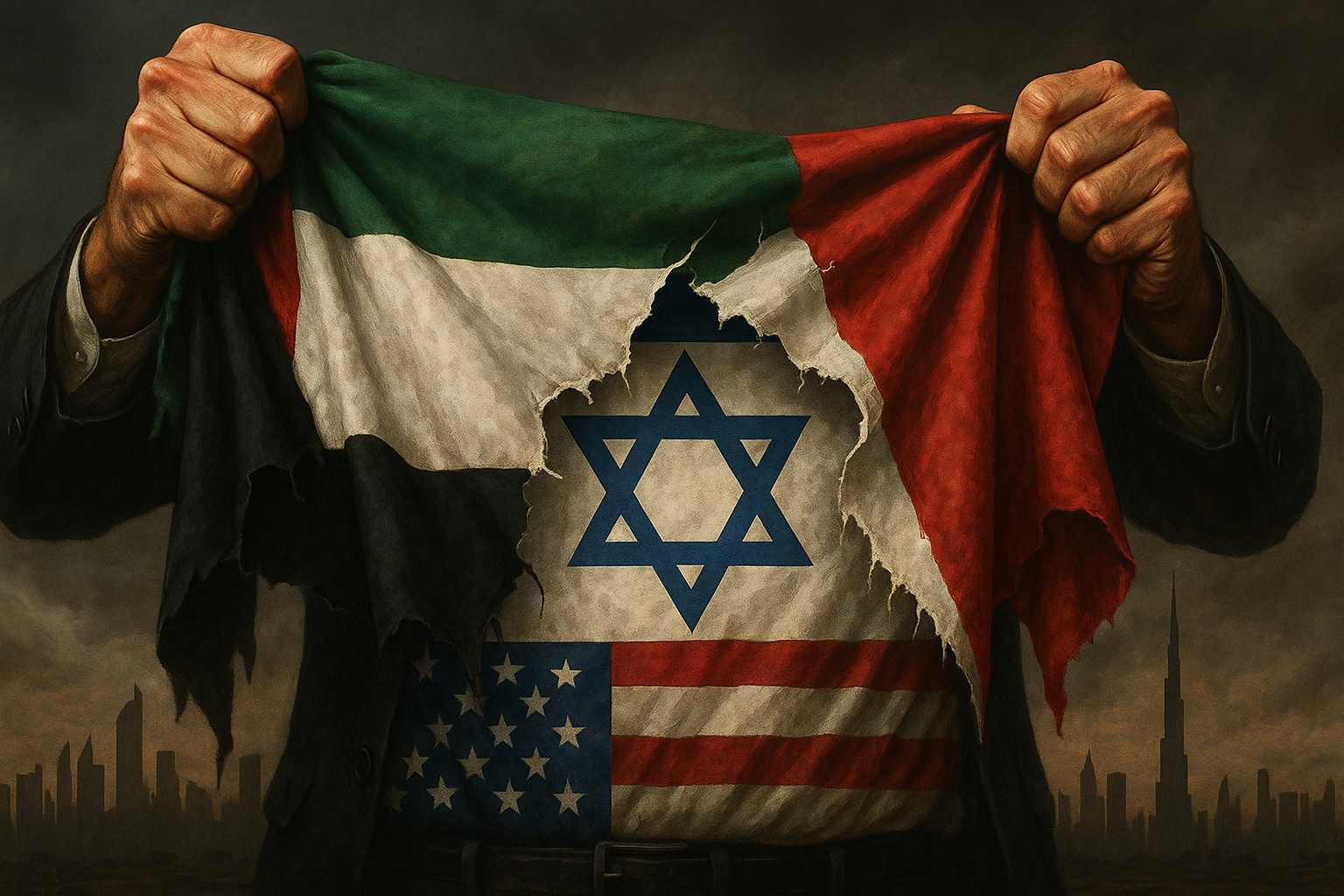
Over the past several months, a rapidly expanding grassroots call for Muslims to boycott the UAE has struck at the very heart of the Gulf monarchies’ most prized asset: their western-engineered soft-power project.
For over two decades, Abu Dhabi and Dubai have functioned as staging grounds for a carefully curated illusion—an incentive model built on skyscrapers, imported cultural spectacles, and the promise that loyalty to the western order brings “modernity” and prestige.
This model was never meant to produce indigenous cultural power; its real purpose, as even western think tanks quietly acknowledge, was to counter Islamic revival by showcasing a depoliticized, consumerist alternative wrapped in glass towers and artificial islands.
The rising boycott movement exposes how fragile this façade always was.
Once ordinary Muslims reject the glitz as a substitute for dignity, sovereignty, and authentic civilizational confidence, the entire incentive structure—one that Washington has relied on for decades to discipline independent Muslim actors—begins to unravel.
The fact that this momentum is emerging from the Muslim street, not state institutions, makes it an even more serious strategic blow to a system whose survival depended on passive admiration and uncritical consumption.
What else does this rising momentum reveal in practical terms?
It demonstrates that even in environments where western-backed dictatorships possess near-total control of the political system—reinforced by billions of dollars in military aid, intelligence cooperation, and economic patronage—these regimes have failed to build a sustainable or organic base of popular legitimacy.
Their authority rests almost entirely on coercion, censorship, and the security guarantees provided by foreign powers.
By contrast, Islamic movements across the region, despite limited financial resources and relentless political repression, consistently demonstrate their ability to mobilize mass support.
They perform well even in heavily manipulated electoral contests, and they can bring hundreds of thousands—sometimes millions—of people into the streets at short notice.
This occurs despite the fact that in many countries simply participating in a peaceful demonstration can lead to imprisonment, torture, or even extrajudicial execution.
The contrast is stark.
In Iraq, for example, the Sadrist movement routinely mobilizes immense street power.
In 2016, 2019 and 2022, Muqtada al-Sadr brought out crowds ranging from 200,000 to over one million people.
This happened despite the US investing hundreds of millions of dollars in shaping Iraq’s post-2003 political order and funding counter-narratives to weaken popular Islamic currents.
Similar patterns are visible in Lebanon, Yemen, Bahrain, and Palestine, where Islamic political movements—often operating under sanctions, media suppression, and state violence—continue to command authentic public support.
The fact that these movements not only survive but thrive under such conditions, while western-backed regimes fail to generate genuine loyalty despite massive external backing, exposes the fundamental fragility of the soft-power architecture imposed on the region.
The emerging social and political climate surrounding the UAE—and the exposure of its artificially engineered soft-power narratives—signals a major shift in West Asia.
In the context of the regional war that began in 2023 and continues to reshape the political landscape, western-backed Arab regimes can no longer provide an indigenous cultural mask for zionist and western neo-colonial policies.
What once appeared as “modern Arab success stories” are now increasingly perceived as marketing veneers for an external geopolitical project.
Public opinion across the region reflects this transformation.
In Jordan, Saudi Arabia, and the UAE itself, broad segments of society now view their ruling elites as extensions of Israeli and American power rather than representatives of Arab or Islamic aspirations.
This shift is unfolding at the same time that Israel and its western sponsors are struggling to legitimize their preferred “islamist” proxy in Damascus—evident from the collapse of their proxy’s credibility.
The paradigm is clear: the old formula of controlled opposition, imported civil society, and Gulf-funded image management is no longer effective.
Wars are fought for political objectives, not just military maneuvers, and the unmasking of the UAE—the west’s most polished soft-power instrument in the Arab world—means that in a prolonged regional confrontation, western imperialism and its local surrogates are operating with rapidly diminishing legitimacy and political stamina.
This will have major consequences.
The next time Yemen targets Saudi Arabia to retaliate for its aggression, or Iran provides support to grassroots socio-political movements anywhere in the region, a growing number of people in West Asia will interpret these actions differently.
They will view them not as “destabilization,” but as part of a broader struggle to unshackle the region from American and Israeli domination.
In an environment where western-aligned regimes are losing the ability to mediate, disguise, or justify foreign agendas, every local actor that resists this order gains new political capital.
The long-standing soft-power architecture designed to neutralize Islamic political consciousness is eroding—and with it, the strategic depth that western powers have depended on for decades.
Related Articles

Prostitution racket in Dubai an affront to Islam’s holiest places
M.A. Shaikh
Sha'ban 01, 1418 1997-12-01
Tiny Qatar trying to act big on the global stage
Yusuf Dhia-Allah
Rabi' al-Awwal 15, 1431 2010-03-01