Why Canada Ignores Israeli Interference in its internal affairs?
Ensuring Socio-economic JusticeCrescent International
Dhu al-Hijjah 07, 1447 2026-05-24
Daily News Analysis

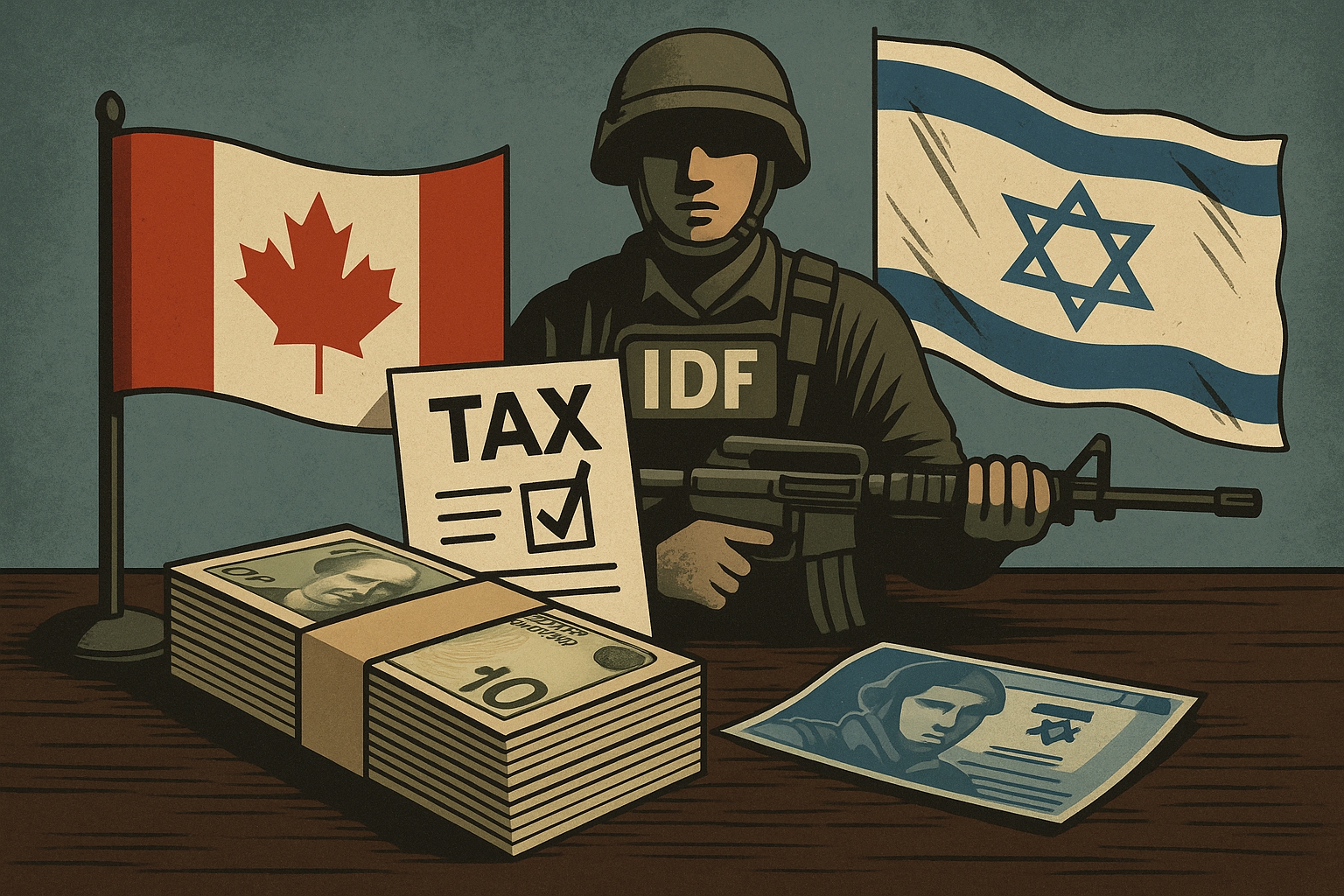
Canada’s political elite increasingly speak the language of diversification and multiculturalism.
Ottawa wants deeper ties with emerging economies, expanded trade across West Asia, and a renewed role as a so-called “middle power” capable of mediating global disputes.
Yet Canada’s unwillingness to confront Israel’s anti-Canadian activities is actively sabotaging those ambitions on a grand scale.
A country cannot present itself as an independent global actor while simultaneously appearing unwilling to defend its own citizens, its institutions and sovereignty when the offending state is apartheid Israel.
Over the past two decades, Canadian citizens have been detained, injured and killed by the zionist regime.
Yet Ottawa’s response has consistently been muted, or entirely absent.
That silence sends a message internationally: Canada applies one standard to adversaries and another to Israel.
The consequences are no longer merely moral or symbolic; they are geopolitical and economic.
A 2026 report by Canadians for Justice and Peace in the Middle East (CJPME) has documented extensive allegations of Israeli interference and transnational repression inside Canada itself.
The report outlines that Israeli ministries and its consulate engaged in covert opinion shaping, propaganda operations, political influence campaigns, and surveillance activities directed at Canadians.
The report describes covertly-funded opinion polling intended to shape Canadian perceptions of Gaza, undisclosed financing of propaganda junkets for Canadian journalists and politicians, and attempts to influence Canadian regulations regarding products from illegal settlements.
It also details allegations of surveillance, profiling, and doxxing campaigns against Canadian activists.
Whether one agrees with every conclusion of the report or not, the broader issue is unavoidable: Ottawa appears unwilling to seriously investigate or politically confront actions that would trigger outrage if carried out by almost any other state.
This double standard is undermining Canada’s credibility abroad.
Across West Asia, public opinion toward western regimes has shifted dramatically in recent years due to the ongoing genocide in Palestine and the wider regional war.
Canada increasingly risks being viewed not as an independent actor, but as an extension of a western bloc unwilling to restrain zionist crimes.
For a country attempting to balance relations between major powers, this perception is a death sentence.
Canada cannot realistically deepen economic and diplomatic relations with dozens of Muslim-majority and West Asian countries while appearing indifferent to anti-Canadian activities linked to Israel.
Canada has good relations with western-backed dictatorships on the west shores of the Persian Gulf, North Africa, and broader West Asia where society has minimal impact on state policy, but public opinion in those societies still matters at a certain level.
Especially in an era where economic partnerships increasingly intersect with political legitimacy.
Ottawa’s permissive posture towards Israel also weakens Canada domestically.
When Canadians see foreign influence concerns applied aggressively toward some states but cautiously toward Israel, public trust erodes.
Foreign policy based on selective enforcement inevitably creates cynicism toward institutions and undermines confidence in national sovereignty itself.
This is especially damaging for a country attempting to preserve soft power.
Canada has historically cultivated an image of moderation, diplomacy, and multilateral credibility.
But soft power depends on consistency.
A state cannot condemn foreign interference in principle while ignoring it in practice when politically inconvenient.
The report warns that Israeli-linked influence campaigns undermine “democratic institutions and processes” in Canada.
That is not a marginal concern. It strikes at the core of Canadian sovereignty.
The deeper problem is strategic.
Canada’s middle-power aspirations are impossible to achieve while remaining politically constrained on Israel.
Middle powers derive influence through credibility, mediation capacity, and perceived independence.
If Canada is seen across large parts of the Global South as incapable of holding Israel accountable for anti-Canadian actions, its diplomatic leverage inevitably declines.
Economic costs will also grow over time.
West Asia is becoming increasingly central to global energy corridors, logistics, infrastructure investment, and emerging multipolar trade networks.
Canada cannot afford to alienate entire populations and political classes across the region for the sake of shielding the apartheid regime from scrutiny.
Ultimately, Ottawa’s approach is self-defeating.
By turning a blind eye to anti-Canadian activities linked to Israel, Canada is not defending its interests; it is weakening them.
Serious foreign policy begins with defending national sovereignty consistently — regardless of who the violator is.
END
Related Articles

Canada’s less than sterling record in support of Palestine rights at the UN
Crescent International
Rabi' al-Thani 15, 1442 2020-11-30