Dr. Kalim Siddiqui Was Right: Iran’s Victory Proves It
Kevin Barrett
Dhu al-Qa'dah 13, 1447 2026-05-01
News & Analysis

by Kevin Barrett (News & Analysis, Crescent International Vol. 56, No. 3, Dhu al-Qa'dah, 1447)
Two-and-a-half decades ago, when I was earning an Islamic Studies related doctorate at the University of Wisconsin-Madison, everyone understood that a global Islamic revival was underway. Various Muslim intellectuals were credited (or blamed) including Sayyid Qutb, Hassan al-Banna, and Abul A‘la Maududi.
Today, with the benefit of hindsight, we can see that another less-well-known figure should have been high on that list. When I was completing my doctorate I barely heard the name Dr. Kalim Siddiqui. Were I of conspiratorial bent, I might suspect that the power structure behind the western academy did not want me to hear about him.
April 18 marked the 30-year anniversary of Dr. Kalim Siddiqui’s death. As we contemplate the momentous implications of Islamic Iran’s ongoing triumph over the zionist-occupied US empire, we ought to pause to reflect on just how farsighted Dr. Siddiqui was in urging all Muslims to support the Islamic Revolution in its efforts to dislodge centuries of tyrannical western occupation of Muslim-majority lands.
Many Muslim revivalist thinkers and organizations have misunderstood the significance of Iran’s Islamic revolution. Hizb-ut-Tahrir (HUT), the leading organization aiming to unite Muslims under a caliphate, approached Imam Khomeini in 1979 to ask him to declare himself Caliph and political leader of all the world’s Muslims. Islamic Iran’s first Supreme Leader respectfully declined, saying that the time for a Caliph was not yet ripe. HUT, apparently smarting from the rejection, turned against the Islamic Republic and towards Sunni sectarianism. But events have shown that Imam Khomeini’s project of building a modern nation-state under Islamic guidance was practical, productive, and promising, whereas HUT’s hyperperfectionism, utopianism, destructive criticism, and sectarianism has produced very limited results.
The Muslim Brotherhood or Ikhwan, an even more influential Sunni-dominated organization, has for the most part been less hostile to Islamic Iran. But it has lacked the imagination to consider Iran’s wilayat al-faqih system as a possible rough model or template for Sunni countries: Why couldn’t they too produce first-rate scholars capable of playing a major political role? And why couldn’t an international body of Islamic scholars play a supranational role in uniting Muslim nations? Unfortunately, rather than viewing Islamic Iran as “a good start, let’s build on it,” the Ikhwan spent many years distancing itself from the world’s only state that is making an honest attempt at Islamic governance.
One notable exception was when Egypt’s president Mohamed Morsi, an Ikhwani leader, visited Tehran in 2012 and tried to normalize relations. That brave and honorable move may have been the single biggest factor that led the zionists and their puppet strongman Abdel Fattah el-Sissi to overthrow and later torture and murder Egypt’s last legitimate leader—a crime that illustrated why Muslims need to seize power via revolution, as Iranians did, rather than attempt to work through hopelessly corrupted “democratic” institutions.
Fortunately, the Ikhwan seems to have at least partially course-corrected during the past year. In June 2025, Saleh Abdel Haq, the Brotherhood’s acting Supreme Guide, sent a letter to then-Supreme Leader Seyyed Ali Khamenei offering the Islamic Republic of Iran “full support” in light of ongoing zionist-American aggression. Then in March 2026, as the biggest-ever zio-American war on Iran erupted, the Ikhwan called for global Islamic unity and pledged full and unconditional support for Islamic Iran. After Iran emerges victorious, insha’Allah, the Ikhwan and other unity-seeking Muslims will have every reason to recognize that Iran is their most important ally.
Islamic Iran’s victorious existential struggle against the world’s most powerful empire has surprised western observers and their bootlicking “Muslim” satraps. But it would not have surprised Dr. Kalim Siddiqui. He understood the immense potential of Iran’s Islamic revolution as a success story that could inspire further empowerment of Muslims. He saw that Islamic Iran was, despite various minor missteps and speed-bumps, traveling on the right path.
He accurately assessed that Islamic Iran was striking a reasonable balance between rigor and pragmatism, between Islamic Guardianship and democratic-republican popular participation, between Islamically-inspired universalism and the various particularisms of Shia-majority, Persian-nationalism-influenced Iran.
Though he argued for Islamic rigor and universalism, he also recognized that state-building is an immensely complex project that often requires decision makers to choose the less-bad option when there is no perfect one. And since the success of Islamic Iran was so critically important to the entire Muslim Ummah, Dr. Siddiqui understood, all Muslims must overlook relatively minor areas of disagreement and work and pray for the Islamic Republic’s success.
Dr. Siddiqui’s claim that Islamic Iran is central to the hopes and aspirations of the Ummah has been proven correct by the shocking events of the past few years. When the zionists began massacring the women and children of Gaza in October 2023, while simultaneously announcing that they planned to demolish the Masjid Al-Aqsa and establish “Greater Israel” on all the land between the Nile and Euphrates Rivers, the only people who stood up against these genocidal criminals were Islamic Iran and its regional allies.
While the governments of the Arab countries directly targeted for invasion and ethnic cleansing by “Greater Israel” stood by and let the genocide happen, and Al-Qaeda and Daesh joined forces with the zionists, Islamic Iran—whose lands are not even part of “Greater Israel”—stood up to defend Masjid al-Aqsa and the people of Palestine, Lebanon, and the entire region.
Dr. Siddiqui saw all this coming. He understood that establishing an Islamic government in a large, powerful state like Iran was the only effective way to build a viable counter-force against the zionist west’s war on Islam. While he would have been dismayed by the craven, bootlicking submission, and the treasonous betrayal of Palestine and Masjid al-Aqsa, evinced today by the despicable “leaders” of almost every Muslim majority country, he would not have been surprised.
Dr. Siddiqui correctly anticipated that Muslims who break free of western colonial control and establish genuine independence would be capable of developing effective doctrines, strategies, and weapons of self-defense. Unfortunately he did not live long enough to see Iran develop and deploy its amazing rockets, cruise missiles, and drones.
But his optimistic take on the Islamic Republic’s future and its leading role in the liberation of the Muslim Ummah foresaw, in a general way, the course of Iran’s march towards victory over the Great and Little Satans—a march whose culmination will bring liberation not just to Iranians, Palestinians, and Lebanese people, but to the whole Ummah and even oppressed non-Muslim peoples, including Latin Americans.
Dr. Siddiqui, in “The Islamic Revolution: achievements, obstacles and goals” (1980) observed that a key goal of the Revolution was to arrive at the moment when “the (Islamically-governed) social order acquires the confidence and the ability to deal with the external world on its own terms.” Since the global conquest and colonization by Europeans that began 500 years ago and reached its apex in the mid-20th century, Muslim-majority nations’ leaders have felt forced to deal with the external world on outsiders’ terms—primarily the terms of the colonial powers.
Specifically, they have felt compelled to call on one or more of those powers for protection against others. From Nasser’s attempts to call on Soviet help against the zionist-dominated Americans, to the Afghan Mujahideen’s attempts to call on the Americans and their Saudi proxies for help against the Soviets (and other Central Asian peoples’ reliance on the CIA for help against the Russians) all Muslim-majority nations except Islamic Iran and its AnsarAllah ally in Yemen have acquiesced to being pawns in the game of non-Muslim empires.
Islamic Iran, as Dr. Siddiqui predicted, refused to play that game. Insisting on genuine sovereignty, Iran has built up its indigenous industrial, technological, and military capabilities without help from outsiders—while maintaining a religiously-ordained prohibition against weapons of mass destruction, including nuclear weapons. Rather than buying “advanced” western weapons, Iran reverse-engineers them and builds its own, which are often improvements on the originals.
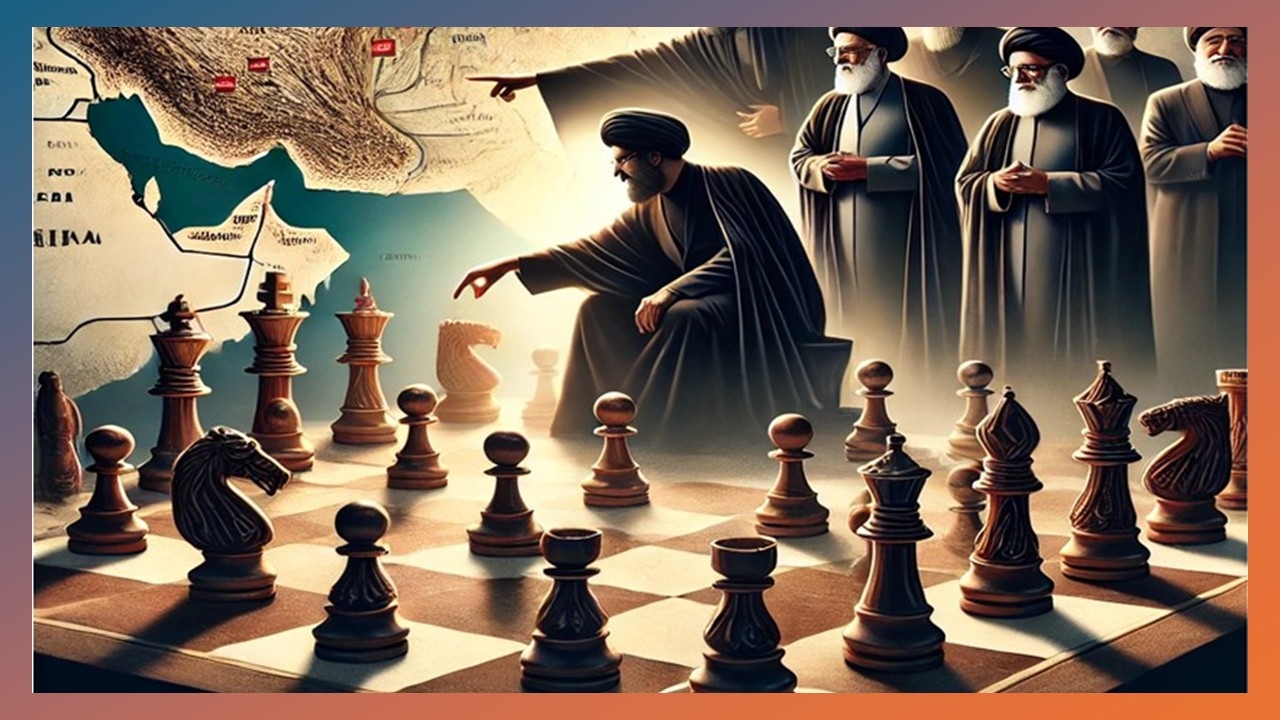
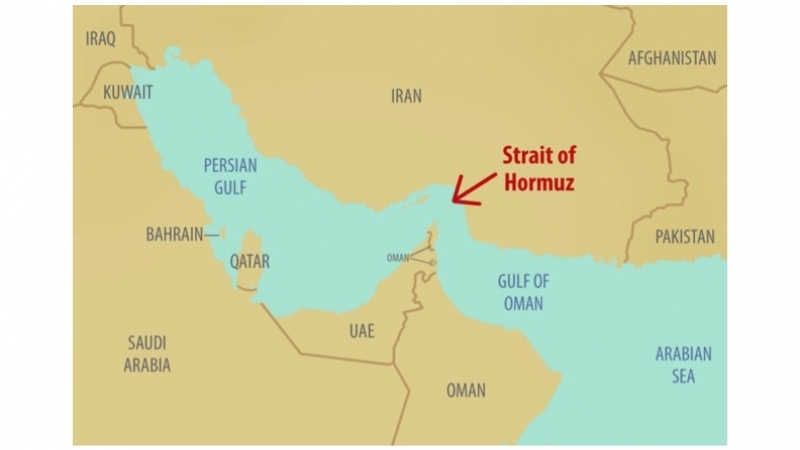
As of late March 2026, Iran has demonstrated the ability to control the critically important Strait of Hormuz, the most important global choke point, despite the best efforts of the world’s biggest navy, and to maintain escalation dominance over the biggest military power the world has ever seen. That is quite an achievement, and Dr. Siddiqui is in the forefront of the small number of thinkers who saw it coming.
Though genuine sovereignty has come at a cost—up to a million Iranians may have died in the 1980s imposed war against western-backed Saddam Hussein, and tens of thousands have been killed by US-supported terrorists since then—Iran has emerged with sufficient power and independence to defeat the US empire and (soon) the Genocidal Zionist Entity. The defeat of the Twin Satans will make it possible for Muslims of the region and the world to follow Iran’s path of asserting genuine independence under sovereign Islamic governance.
The defeat of the zio-American empire will also free the Islamic world to unite. As long as the US and its vassals dominated the world, any Muslim leaders who defied their divide-and-conquer strategy by seeking unity faced insurmountable obstacles. The empire would use bribery and subordination, assassination, terrorism, regime-change campaigns, and if necessary all-out war to depose any Muslim leader who sought to do his Islamic duty of seeking the reunification of the Ummah or even regions thereof.
The architects of the short-lived United Arab Republic, the eccentric but heroic visionary Muammar Qaddafi, and of course thousands of oppressed and martyred activists have been stymied by the Epstein Empire and its minions, who fear a world in which a unified Islamic nation of two billion people would accrue sufficient power to end Global Zionism and its usury fiat banking system.
Many of the most insightful western thinkers, including anthropologist Ernst Gellner, have understood, as Dr. Siddiqui did, that there are only two contenders for the position of globally dominant interpretive framework: the western secular outlook with its competing rationalist and anti-rationalist (postmodern) versions; and Islam, a unifying and encompassing outlook based on eternal sacred truths that teaches tolerance and protection for all divinely-revealed religions.
All other outlooks and schools—Chinese Confucianist “communism,” the various Christianities, Hinduism, Buddhism, Taoism, and so on—are particularist, not universal, and hold little promise of becoming the basis of an international, multicultural, multi-confessional global civilization. Only Islam has the potential to overthrow the usury banking cartel and reinject (divinely revealed) morality into the international system.
The zio-American empire of usury is collapsing, both because it is wildly overextended and behaving irrationally, and because Russia, China, and Iran have accumulated enough state power to defeat it on the relevant battlefields. By divine providence, and the genius and hard work of the Islamic Resistance and its citadel, Islamic Iran, one of the three great powers that will defeat the US empire happens to be ruled by people who strive to be guided by God’s final revelation.
So Islamic Iran will be, and fully deserves to be, a cornerstone and inspiration of the free, uniting Islamic Ummah that will emerge in a post-zio-American world. And the western-based thinker who most clear-sightedly saw how these events would likely unfold, and how Muslims ought to help them unfold, was the remarkably prescient Dr. Kalim Saddiqui.
Related Articles
From Caracas to Hormuz: Resource Geopolitics through the Qur’anic Lens - Part – I
Mohamed Ousman
Rajab 19, 1447 2026-01-08

Dr. Kalim Siddiqui – Life, Thought, and Global Islamic Vision
Muslim Mahmood
Shawwal 13, 1447 2026-04-01