From Caracas to Hormuz: Resource Geopolitics through the Qur’anic Lens - Part – I
Ensuring Socio-economic JusticeMohamed Ousman
Rajab 19, 1447 2026-01-08
Daily News Analysis

The US attempt to grab Venezuelan oil reserves represents naked imperialism and will serve as a pivotal realignment in global energy power structures.
By attempting to grab the world’s largest proven oil deposits, the US—as the global hegemon—will reduce global exposure to supply-chain vulnerabilities originating in West Asia (aka the Middle East).
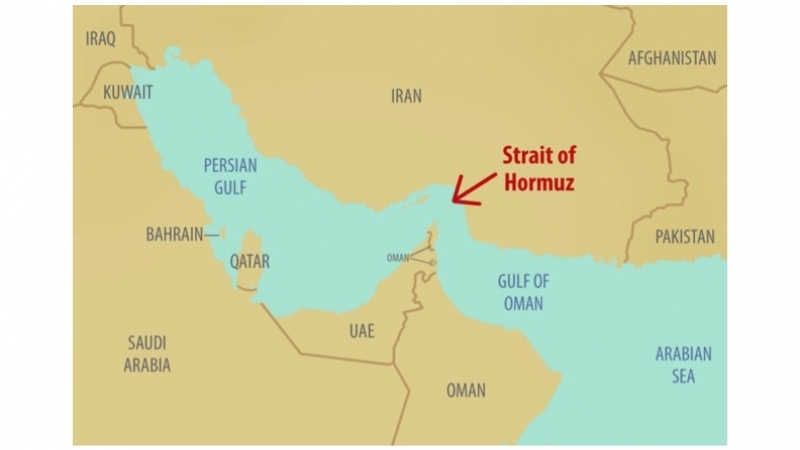
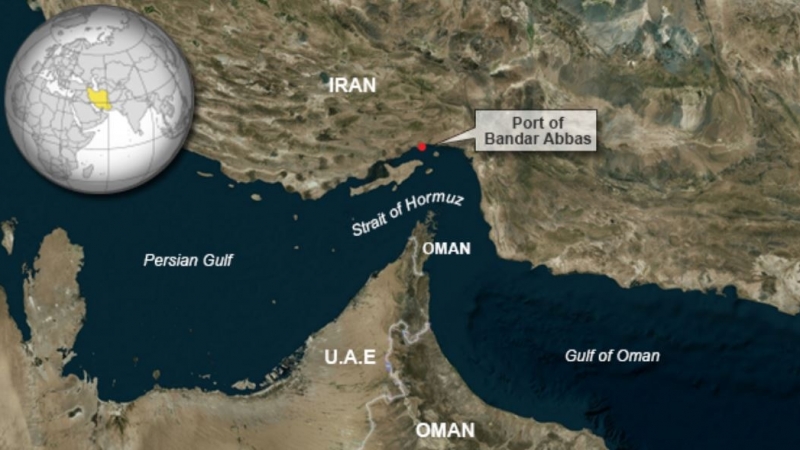
This is especially critical because of Iran’s long-standing warning to close the Strait of Hormuz if it faces an existential threat.
This shift alters the strategic balance in three key ways:
- Reduced Iranian Leverage: Iran’s historical deterrent—its ability to disrupt oil flows through Hormuz—becomes less effective if the US can replace Middle Eastern supply disruptions with western hemisphere reserves.
- Increased US Strategic Flexibility: If Venezuelan resources come under its control, Washington gains greater freedom to escalate pressure on Iran—economically, diplomatically, and militarily—without risking catastrophic spikes in energy prices.
- Geopolitical Signaling: The operation demonstrates that the US is willing to bypass conventional diplomatic processes to grab energy assets preemptively, sending a strong signal to states reliant on resource leverage for deterrence.
From the perspective of Islamic political analysis, this development raises major ethical and strategic considerations.
The Qur’anic critique of domination and resource exploitation, paired with insights from contemporary Islamic thinkers (Imam Muhammad al-Asi, Imam Zafar Bangash, Dr. Kalim Siddiqui), frames this as part of a broader pattern in which powerful states extract resources and shape geopolitical conditions to maintain systemic hegemony.
For movements concerned with justice and self-determination, the key issue is not only the material implications of US energy repositioning but also the deeper structural consequences for global equity, regional stability and the autonomy of resource-rich yet politically constrained countries.
Contemporary Geopolitical Context: US, Venezuela, Iran
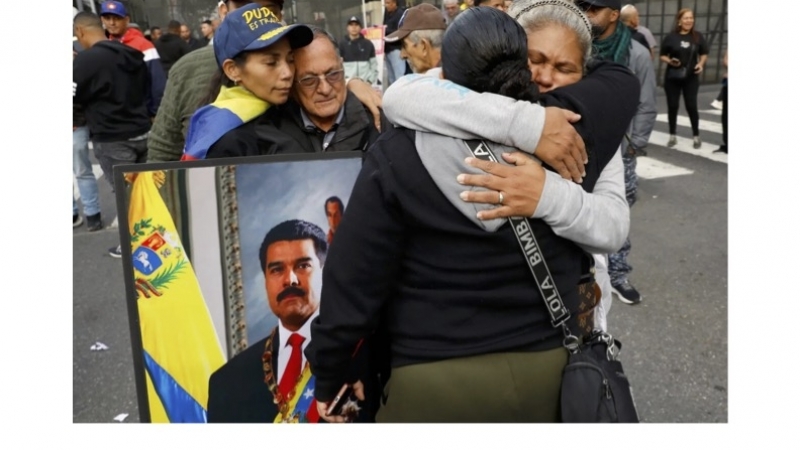
On January 3, 2026, the United States launched a major military attack on Venezuela in which President Nicolas Maduro was kidnapped and taken to the US.
Venezuela’s vast oil reserves—estimated at 3 billion barrels—were US’s target.
If established, it will send 30 million to 50 million barrels of oil to ports under US control.
This geopolitical shift is more than a western hemisphere resource grab.
By controlling Venezuelan oil, the US effectively adds a massive energy hedge to offset global oil market risks.
It will reduce the impact of Iran’s closure of the Strait of Hormuz in the event of a US or Israeli attack.
Hormuz is a global chokepoint for oil flow.
Iran has periodically hinted at such a blockade as a strategic lever against western threats, especially in times of conflict over its nuclear program and regional influence.
Controlling Venezuelan oil dampens the potential disruption that a Hormuz closure would inflict on US energy supply and the wider global economy, while providing Washington a strategic cushion against Middle Eastern volatility that could arise from a broader clash with Iran or related regional actors.
Imam al-Asī’s Qur’anic Theory
Imam Muhammad al-Asī’s Qur’anic approach—as articulated in The Ascendant Qur’an and ICIT writings—frames socio-political dynamics not merely as material power struggles but as manifestations of competing divine versus human power cultures.
The Qur’an, in Asī’s view, reveals patterns of justice versus domination and urges the oppressed to distinguish structural power from overt colonial imposition.
Applied here, the US takeover of Venezuelan oil is not simply a geopolitical maneuver but an embodiment of an entrenched global power culture that perpetuates exploitation under moral rationales (security, democracy).
From this perspective, such actions camouflage hegemonic tentacles that operate through economic, legal, and military instruments, reflecting the same divine critique of unjust domination found in Qur’anic narratives.
The Qur’an’s emphasis on establishing justice (adl) and opposing oppression (zulm) provides a moral compass to identify not only obvious military occupation but also subtle forms of economic and political subjugation.
Al-Asī’s theory suggests that without Qur’anic consciousness informing political analysis, leaders and societies risk normalizing such power structures, seeing them as inevitable or justified, rather than discerning deeper patterns of injustice that the Qur’an challenges.
In the context of oil geopolitics, this means resisting reduction of human agency to resource competition alone and recognizing how spiritual-ethical frameworks critique the very logic of domination underpinning global energy politics.
Zafar Bangash’s Sirah Theory
Imam Zafar Bangash’s Sirah theory underscores the Prophet’s early model where ideological clarity and community cohesion preceded political authority.
He argues that principled independence—rooted in moral and communal integrity—is foundational before pursuing political influence or engaging in power structures.
Viewed through this lens, the US seizing Venezuelan oil reflects a power-first strategy, prioritizing resource control over moral legitimacy, contrary to the prophetic exemple which emphasizes ethical purpose before political action.
In contrast, movements seeking to reclaim autonomy (such as Iran’s resistance to western pressure) are interpreted not simply as geopolitical actors but as assertions of autonomy against hegemonic designs.
Bangash would critique the west for failing to root its political projects in holistic ethical commitment.
Instead it engages in realpolitik that replicates cycles of domination rather than building communities grounded in justice and unity.
Kalim Siddiqui’s Islamic Movement Theory
Dr. Kalim Siddiqui’s Islamic movement framework situates Muslim socio-political agency not within the logic of fragmentation but in collective transformation against colonial and neo-colonial systems.
Siddiqui emphasized that Islamic movements must pursue unity, self-determination, and structural resistance instead of accommodation with external hegemonic powers.
From this vantage, the US attack on Venezuela embodies neo-colonial dynamics, where external powers manipulate weaker states’ resources and political futures.
Meanwhile, Iran’s potential resistance to western encroachment, including any threat to close the Strait of Hormuz in response to perceived existential threats, can be read as an asymmetric response to systemic subjugation.
For Siddiqui, true resistance would transcend tactical maneuvers and involve strategic collective Muslim action oriented toward reshaping global power architecture, rather than perpetuating cycles of militarized reactivity.
(Next: Geopolitical implications for Iran and the Strait of Hormuz – Part II)
Related Articles
Ideological Independence vs Imperial Modus Operandi: US attacks on Venezuela & Iran
Mohamed Ousman
Rajab 15, 1447 2026-01-04
Iran, Geopolitics and closure of the Strait of Hormuz – Part II
Mohamed Ousman
Sha'ban 02, 1447 2026-01-21