Haram in Makkah Under Attack?! Not Haram in Al-Aqsa!
Mohamed Ousman
Rabi' al-Thani 06, 1448 2026-09-18
Daily News Analysis

The Makkah Region occupies about 137,000 square kilometres in western Saudi-colonized Arabia, spanning the historic Hijaz from the Red Sea coast inland.
It borders Al-Madinah north, Riyadh east, and Al-Baha and Aseer south.
Principal cities are Makkah, Jeddah, Taif and Rabigh.
The region combines Islam’s Holy Sanctuaries, including al-Masjid al-Haram in Makkah, with major commercial, industrial, transport and port infrastructure, including Jeddah Port, King Abdulaziz International Airport and major logistics zones.
The Saudi regime disingenuously labels attacks on military installations and supporting infrastructure within this broad Makkah Region as attacks on the Holy Sanctuary, Makkah.
US military bases, and dens of vice
American personnel have operated from or alongside Saudi facilities in Jeddah and Taif, including US Military Training Mission detachments.
The facilities at Jeddah, notably King Faisal Naval Base and King Fahd Naval Base are used by US forces, while King Abdulaziz International Airport has supported US military operations historically.
These are American bases.
Current US-Saudi exercises in Jeddah demonstrate continuing access and cooperation.
Although the Makkah Region officially has no legally recognized red-light districts or conventional alcohol-serving nightclubs, such activity is overlooked.
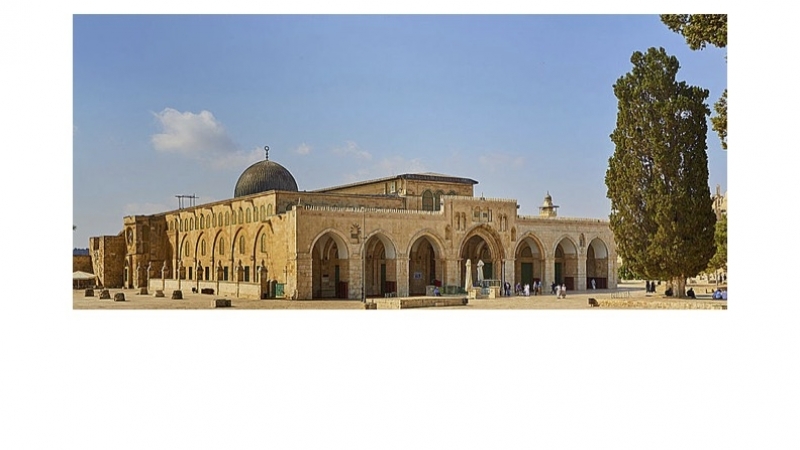
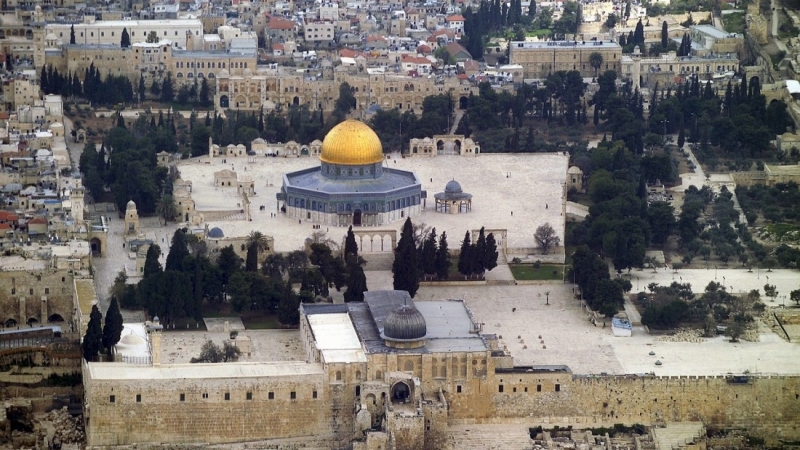
Attacks and incursions on Masjid Al-Aqsa
Incidents include the 1969 arson attack on Al-Aqsa Mosque; repeated Israeli security incursions and restrictions during the First and Second Intifadas; the 2000 Ariel Sharon trespass that triggered the Second Intifada; raids and clashes in 2014; police incursions and arrests during Ramadan in April 2022; and repeated settler-colonial and official incursions since 2023.
Saudi regime statements have never ventured beyond token condemnation.
Yet it disingenuously labels attacks on military installations and supporting infrastructure within the Makkah Region as attacks on the Holy Sanctuary in Makkah but does not label zionist Israeli Jewish attacks on Al-Aqsa as attacks on the Holy Sanctuary, Al-Quds.
Complicit in this narrative are the sectarian scholars for dollars.
Imam Muhammad Al-Asi’s Qur’anic framework
Al-Asi’s Qur’anic framework begins by challenging the assumption that Makkah and Madinah can be treated as ordinary national possessions (The Ascendant Qur’an: Realigning Man to the Divine Power Culture. Toronto. (Volumes 2008-2024).
His central conceptual move is to distinguish sacred geography from ethnic, dynastic, and territorial ownership.
He argues that Makkah “cannot and must not carry tribal, racial, or nationalistic baggage” and that Muslims were required to pass a “denationalization test,” moving from cultural attachment toward universal covenant.
In this reading, the Qur’anic significance of Makkah is not that it belongs to an Arabian nation, but that it is a sanctuary dedicated to Allah and oriented toward the Ummah.
That framework creates a sharp analytical distinction between administering the Haram and claiming proprietary sovereignty over it.
Al-Asi states that the sanctuary is “Allah’s house, not anyone’s personal property” and emphasizes that Prophets Ibrahim and Isma‘il maintained it by divine command rather than inheriting it as private family property.
He further argues that inheritance of Ibrahim’s role and the Haram rests on “yielding to Allah —Islam—and not on the basis of familial ancestry or racial cultivation.”
Applied to modern Saudi nationalism, the criticism would, therefore, be directed not merely at the existence of state administration, but at any ideology that converts custodianship into exclusive national ownership, embeds sacred authority within dynastic legitimacy, or makes access to the sanctuary primarily an expression of territorial sovereignty.
The Saudi regime established internationally recognized territorial sovereignty over the Hijaz and via usurpation, incorporated Makkah and Madinah into its kingdom.
The analytical question is, therefore, not whether Saudi Arabia exercises state jurisdiction—it plainly does—but whether such jurisdiction should be morally or theodologically equated with ownership of the Haram.
Al-Asi’s framework rejects that equivalence. His argument that Makkah was redefined as “transnational, transcultural, and trans-Arabian” supplies a theodological critique of nationalization, rather than a conventional claim under contemporary international law.
The same framework evaluates political leadership through covenantal criteria.
Al-Asi interprets Qur’an 2:124: “My covenant shall not include the offenders” as establishing that leadership is conditional upon justice, moral responsibility, and fidelity to Allah rather than bloodline.
He explicitly warns that inherited authority cannot substitute for ethical qualification.
Thus, a Qur’anic assessment of Saudi rule would ask whether governmental power protects the sanctuary’s universal function, promotes justice, and serves Muslims beyond national boundaries. It is not enough for rulers to invoke lineage, custodianship titles, or administrative control.
This becomes relevant to Al-Aqsa.
Al-Asi’s discussion of the change of qiblah treats Jerusalem as a test against parochial attachment: Muslims had to learn that sacred commitment transcends geography, ethnicity, and nationalism.
His framework, therefore, makes the protection of Al-Aqsa conceptually connected to the status of Makkah.
If Makkah is genuinely a universal sanctuary, then solidarity with another major Islamic sanctuary should not be reduced to Saudi national interest.
Saudi policy can accurately be described as non-military in relation to Al-Aqsa: the state has not publicly announced military action to protect the mosque.
This constitutes hypocrisy in Al-Asi’s normative sense.
His Qur’anic framework would likely measure leadership by consequences and moral commitment rather than by statements alone.
The strongest critique, therefore, is not that Saudi-colonized Arabia does nothing, but that its documented response is principally diplomatic and multilateral rather than coercive or military towards zionist attacks of another Islamic Santuary.
Al-Asi’s standard would ask whether such conduct sufficiently embodies the transnational obligations implied by the Haram and the qiblah.
This exposes a tension between statecraft and universal Islamic sanctuary obligations.
Imam Zafar Bangash’s Seerah and the Covenant of Madinah
Bangash’s Seerah framework treats the Prophet’s mission as institution-building as well as spiritual instruction.
He argues that Seerah should be read analytically through power, because the Prophet’s model included social transformation, leadership, statecraft and political organization. Madinah is the crucial example: the Prophet established a territorial base, unified leadership and a community capable of protecting members and pursuing justice.
The Covenant of Madinah is central (Power Manifestations of the Sirah. Toronto, 2011).
Bangash describes it as a written constitutional framework in which “the rights and obligations of all its inhabitants were fully recognized and respected,” replacing arbitrary rule with rule of law.
The Covenant of Madinah, therefore, links authority with responsibility: leadership is not simply custodianship, but organized capacity to secure rights, maintain justice and defend the community.
Applied to Saudi policy toward Al-Aqsa, this framework asks more than whether Riyadh issues condemnations.
Saudi Arabia has condemned Israeli incursions and restrictions but its documented policy towards zionist attacks on the Holy Sanctuary, Al-Aqsa, remains diplomatic rather than military.
Bangash distinguishes moral denunciation from political power.
He argues that “right must assert itself with might, with power,” while power should establish “peace, security and justice.”
Accordingly, the critique of Saudi passivity forms a critique of state inaction.
Diplomatic appeals and international law advocacy constitute inadequate responsibility toward an Islamic sanctuary.
In Bangash’s framework, leadership is demonstrated through institutions and effective protection, not mere declarations.
The Covenant of Madinah implies reciprocal obligations within not only the State, but also the community.
Thus, the Saudi nation-state responsibilities and Islamic obligations towards the Third Haram derived from the Prophetic political model and the wider Muslim community exposes hypocrisy.
Dr. Kalim Siddiqui’s Islamic Movement Theory
Dr. Siddiqui’s Islamic Movement theory begins from a systemic diagnosis: Muslims constitute one Ummah, yet modern political fragmentation has made that unity appear “notional and even romantic.” (Bangash, Zafar (ed). In Pursuit of the Power of Islam: Major Writings of Kalim Siddiqui. Toronto: The Open Press (1996).)
He rejects treating Muslim nation-states as Islam’s natural or final political form.
His project calls for political thought rooted in the Qur’an and Sunnah and reconstruction of Muslim political consciousness.
From this perspective, Saudi colonized Arabia’s response to Al-Aqsa illustrates tension between nation-state interests and Ummah-wide obligations.
The Saudi state speaks as a government and calls upon the international community to act. But Siddiqui’s theory asks: does the existing state system possess institutions capable of translating shared Islamic identity into collective political action?
His answer is that fragmentation is a structural problem. He describes the Islamic movement as dedicated to rebuilding Islamic civilization and criticizes nation-state assumptions that divide the Ummah.
Under this lens, the absence of Saudi military intervention at Al-Aqsa is not simply a question of rhetoric; it reflects the limits of a nation-state whose decisions are organized around national sovereignty, alliances, security calculations and diplomacy.
Siddiqui’s sharper criticism is that diplomatic condemnation remains compartmentalized within a fragmented interstate system.
Al-Aqsa symbolizes a shared Islamic concern extending beyond national territory.
The theoretical gap is, therefore, between Ummah consciousness and state capacity: the former is transnational, the latter is territorially bounded.
Siddiqui’s proposed remedy is systemic transformation—developing political consciousness and institutions capable of converting Islamic solidarity into organized collective agency and political jurisdiction today.
Related Articles

Qur’an’s solution to contemporary challenges facing the Muslim world
Crescent International
Shawwal 22, 1446 2025-04-20