Jihad, Palestine and Islamic Political Thought: Nidal Hasan’s Strategic Struggle
Mohamed Ousman
Jumada' al-Ula' 08, 1448 2026-10-19
Daily News Analysis

During the Fort Hood military base shooting in Texas on November 5, 2009, Major Nidal Hasan killed 13 people and injured more than 30 others.
He was an Army psychiatrist treating soldiers suffering from post-traumatic stress disorder after killing innocent people in Afghanistan and Iraq.
Hasan was affected by Muslim suffering in conflicts involving the US.
His case became a focal point in debates about radicalisation, military service and US foreign policy.
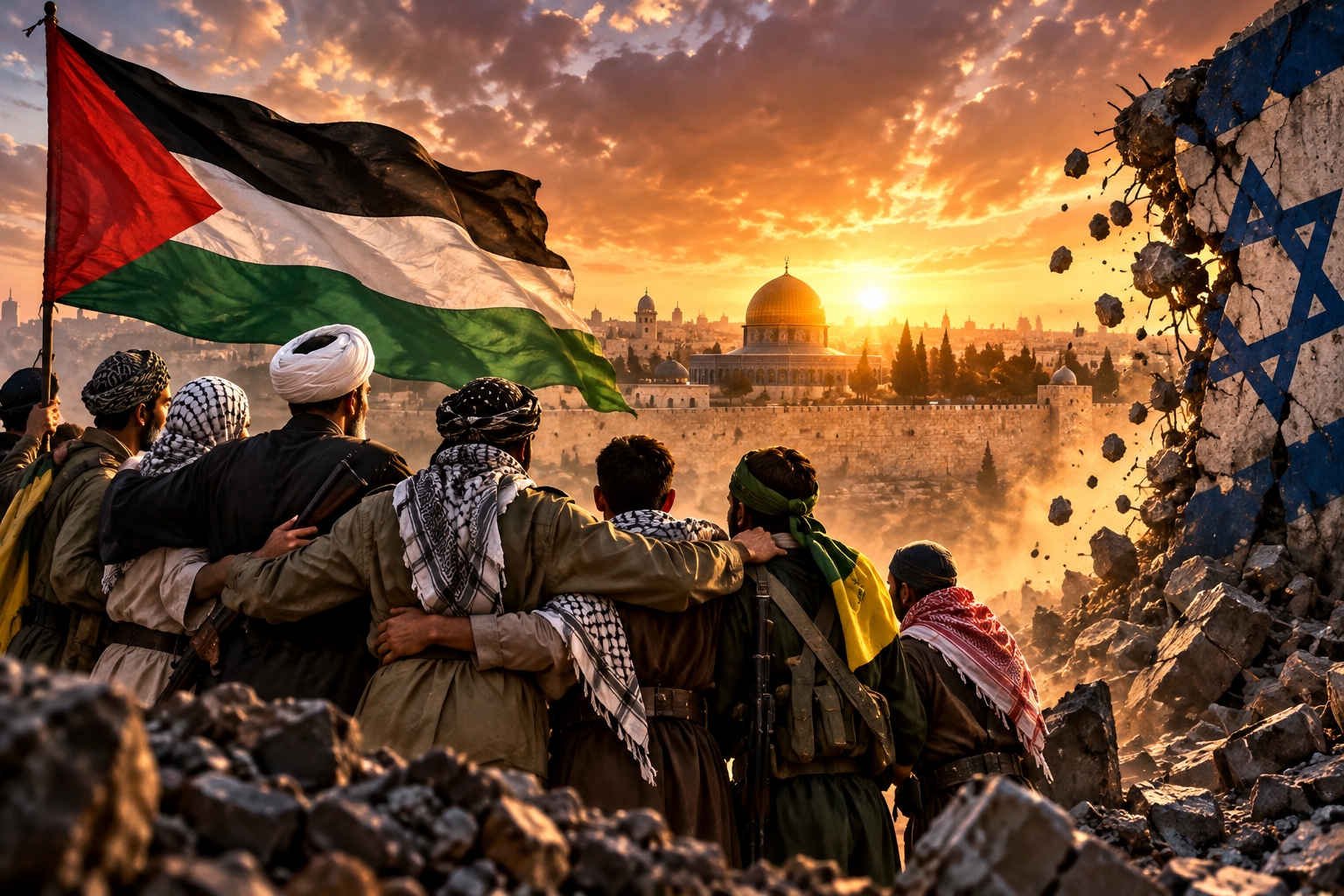
The sacrifices associated with Palestine include lives lost, families displaced, homes destroyed, prolonged imprisonment and the sustained efforts of communities seeking dignity and liberation.
The shooting was widely condemned as domestic terrorism and sparked debate over its classification and Hasan’s apparent desire for martyrdom.
In October 2026, the announcement of his planned execution by firing squad and proposed public livestream triggered bipartisan political opposition, public outrage, religious condemnation and UN human-rights concerns.
Critics warned that broadcasting the execution would be inhumane, damage public morality and provide terrorist groups with propaganda.
On October 15, President Trump announced cancellation of livestreaming, restricting viewing to soldiers’ immediate families.
Analysing Hasan’s case alongside Palestine requires examining how ethical commitments, collective responsibility and legitimate political organisation sharpen resistance.
Imam Muhammad Al-Asi’s Qur’anic Framework regarding Jihad as ethical striving, collective discipline and political transformation
Al-Asi’s Qur’anic framework interprets jihad as a comprehensive strategic struggle to transform society according to divine principles, particularly justice, accountability and the rejection of oppression (Al-Āsī, Muhammad: The Ascendant Qur’an: Realigning Man to the Divine Power Culture. (Vols 1-12). ICIT, Toronto (2008-2024).
Jihad is not confined to individual spirituality, nor is it presented simply as military confrontation.
It encompasses sustained strategic effort, collective organisation, political responsibility and moral commitment.
Al-Asi describes a mujahid as someone who strives to create an environment receptive to the institutionalisation of Islamic principles of social justice.
This framework raises a fundamental question: how should a movement translate moral solidarity with Palestinians into effective, sustainable political change without abandoning the ethical standards that give its struggle legitimacy?
One significant shift in the contemporary discourse on jihad concerns the movement from immediate emotional reaction towards organised, strategic action.
Al-Asi emphasises sabr, understood not merely as passive patience but as constant resistance under pressure and adversity.
He argues that the Islamic work ethic is not invalidated by unfavourable worldly outcomes; commitment rests on preparation, perseverance and accountability rather than immediate success.
In the Palestinian context, this can explain why a struggle may continue across generations despite displacement, occupation, imprisonment and repeated political setbacks.
Yet perseverance does not mean accepting subjugation.
It means building institutions capable of sustaining resistance to eventually eradicate subjugation.
The critical distinction is between endurance that preserves human dignity and a politics of vengeance that treats suffering as a reason to inflict further suffering.
Al-Asi’s framework grounded in justice must assess means as well as ends.
He stresses the importance of leadership, organisation and a coherent political community.
Referring to the early Muslim community, he argues that collective action requires recognised leadership and an established social and political foundation.
He also invokes shura/consultation as an essential principle in collective decision-making, drawing on the Prophet’s deliberations before the Battle of Uhud.
These concepts are particularly relevant to understanding the limitations of isolated, self-appointed acts.
An individual’s religiosity does not establish political legitimacy, nor does personal sacrifice automatically confer authority to represent a population.
In Palestine, accountable representation, consultation, public consent and institutional oversight are essential to distinguishing collective political agency from actions undertaken by individuals which helps explain why an individual attack cannot be treated as an authoritative expression of the Palestinian struggle.
Al-Asi explicitly recognises restraints on warfare.
He quotes instructions attributed to the Prophet against mutilation and killing children, and cites Abu Bakr’s instruction not to kill women, children or elderly people.
This establishes a standard: a professed purpose does not excuse violations of moral obligations.
The implications are significant. Civilians cannot be treated as combatants, collective punishment cannot be justified and the suffering of one civilian population does not erase the rights of another civilian population.
Consequently, jihad should not be measured by the escalation or spectacular character of violence.
It should be assessed by the capacity to protect people, sustain justice, establish accountability and prevent oppression from reproducing itself.
Al-Asi contrasts material military superiority with spiritual conviction, using the Qur’anic account of Talut and Goliath to emphasise perseverance under unequal conditions.
His discussion challenges the assumption that political success depends exclusively on technological or military strength.
However, this interpretation should not be converted into a prediction that a smaller force must prevail or that battlefield losses demonstrate divine approval.
Such conclusions risk turning suffering into a justification for further sacrifice.
Overall, jihad is understood primarily through armed confrontation and a broader examination of organised, morally accountable struggle.
Al-Asi's framework supplies concepts of perseverance, leadership, consultation and ethical restraint. Applied to Palestine, its strongest defensible contribution is a model of sustained resistance to injustice that places civilian protection, political accountability and human dignity at the centre.
Jihad Through Imam Zafar Bangash’s Seerah Framework and the Covenant of Madinah
Bangash’s approach to the Seerah treats the Prophet’s life as a source of guidance for understanding political leadership, institution-building and the development of a Muslim community (Bangash, Zafar: Power Manifestations of the Sirah. Toronto: ICIT. (2011).
This perspective shifts attention from isolated confrontations to the relationship between moral principles, collective organisation and political circumstances.
The Covenant of Madinah offers a particularly relevant framework.
Rather than understanding political community solely through “religious” identity, the document organised relations among distinct groups within a shared political arrangement.
It addressed collective security, mutual obligations and the management of internal differences.
It is widely studied as an important example of early Muslim political community-building.
This framework suggests that effective resistance to injustice requires more than military confrontation.
It requires legitimate representation, social solidarity, functioning institutions and a political vision capable of accommodating religious and communal diversity.
In Palestine, Muslims and other communities have overlapping interests in security, freedom, equal rights and protection from displacement.
The Seerah framework also highlights the importance of distinguishing strategic patience from political passivity.
Negotiation and coalition-building can form part of a sustained struggle for self-determination. Where armed conflict exists, the protection of civilians and compliance with Islamic humanitarian law remain indispensable.
The principal lesson is that durable political agency depends on legitimate leadership, collective obligations and institutions capable of sustaining a just social order.
For Palestine, this makes the Seerah relevant as a framework for combining principled resistance, political participation and inclusive community-building.
Jihad Through Dr. Kalim Siddiqui’s Islamic Movement Theory
Siddiqui’s Islamic Movement Theory examines how Muslims might recover collective political agency through intellectual renewal, institutional development and the reconstruction of political thought (Bangash, Zafar: In Pursuit of the Power of Islam: Major Writings of Kalim Siddiqui. Toronto: The Open Press (1996) & Siddiqui, Kalim: Stages of Islamic Revolution. London: The Open Press, (1996).
He considered the movement as a connected system directed towards the renewal of Islamic civilisation.
He criticised the fragmentation of Muslim political life into competing nation-states.
Applied to Palestine, Siddiqui’s theory directs attention towards the structural conditions underlying political weakness: divided leadership, institutional dependence, fragmented strategies and the difficulty of sustaining coordinated international solidarity.
His approach suggests that a movement’s durability depends not simply on popular anger or military capability but also on its intellectual foundations, social organisation and ability to articulate a coherent political vision.
The contemporary Palestinian struggle illustrates the relevance of this institutional perspective.
Political divisions, competing leadership claims and differing views about negotiations, resistance and governance complicate the pursuit of self-determination.
His systems-oriented analysis would examine how representative institutions, Muslim civil society, organisations and extended networks can cooperate without erasing legitimate political disagreements.
However, Siddiqui’s critique of nation-states should not be interpreted as a reason to disregard Palestinian democratic representation.
His theory is a normative vision of Islamic political transformation and political legitimacy.
Its application must integrate intellectual critique with the practical requirements of protecting rights and establishing accountable governance.
Viewed through this framework, tactics are best understood as a move from episodic confrontation towards sustained political capacity: developing institutions, building coalitions, communicating a credible programme to secure Palestinian rights. Nonviolent mobilisation, lawful advocacy and institutional reform can contribute to this process.
The central insight is that political transformation requires organised social and intellectual capacity, not merely opposition to an adversary.
Dr Siddiqui’s framework is most useful when it encourages strategic coherence, accountable leadership and long-term institution-building while keeping Islamic justice central to political action.
Across these three frameworks, the central theme is the relationship between moral purpose and collective political agency.
Al-Asi foregrounds ethical accountability and perseverance; Bangash’s Seerah approach highlights leadership and community-building; and Siddiqui emphasises intellectual and institutional renewal.
Applied critically to Jihad and Palestine, these perspectives support a sustained struggle for self-determination grounded in civilian protection, accountable representation and durable political institutions.
Related Articles

US Exit From Iraq Signals the End of “Greater Israel” Project
Iqbal Jassat
Rabi' al-Thani 22, 1448 2026-10-04
‘Iranian intelligence seeking talks with US to end the war’ are utter lies
Crescent International
Ramadan 15, 1447 2026-03-05