Lebanon: Ceasefire Without Sovereignty
Empowering Weak & OppressedOmar Ahmed
Jumada' al-Akhirah 21, 1448 2026-12-01
News & Analysis

by Omar Ahmed (News & Analysis, Crescent International Vol. 56, No. 10, Jumada' al-Akhirah, 1448)
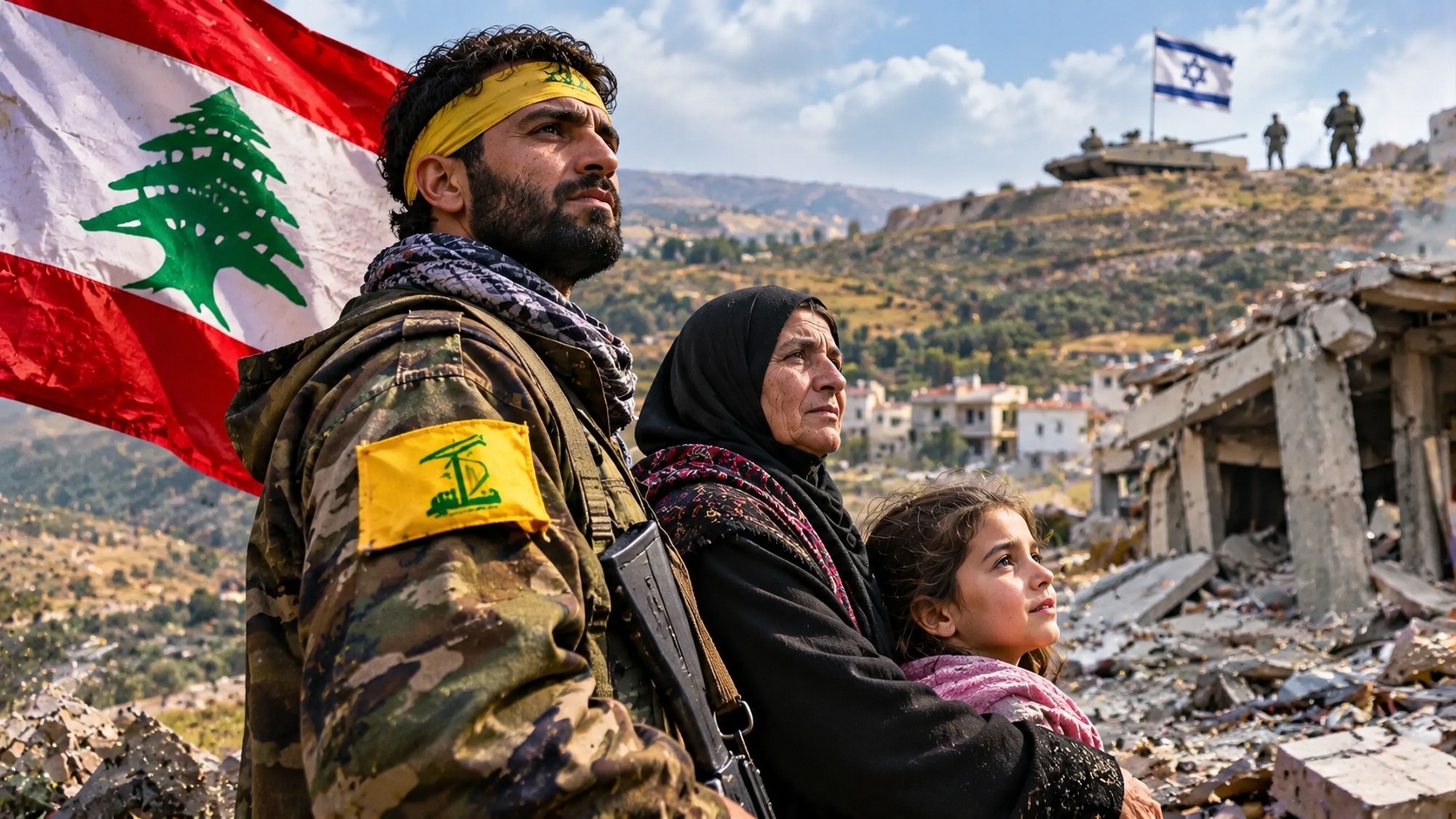
The ceasefire has left the zionist entity in control of parts of southern Lebanon even as Washington presses Beirut to disarm Hizbullah. In districts still held by the occupation forces, the Lebanese army cannot deploy freely and local authorities cannot guarantee residents safe passage home. Washington is asking Beirut to settle the future of Hizbullah’s arms while the Lebanese state is still unable to exercise authority over part of its territory.
Lebanon’s southern front reopened on October 8, 2023, a day after Operation Al-Aqsa Flood, when Hizbullah began exchange of fire across the border in support of Gaza. Fighting escalated again in March 2026 after the US and the zionist entity launched their war on the Islamic Republic of Iran on February 28. Hizbullah entered the fighting in solidarity with Iran.
The renewed occupation also raised a question that predates the current war. If Hizbullah were to lay down its arms while occupation forces remained in the south, who would defend the border villages?
Beirut and Hizbullah have long disagreed over who should make decisions about war and peace, and both oppose the occupation of Lebanese territory. Their dispute over military authority has to be settled within Lebanon. Foreign pressure on Beirut to disarm Hizbullah gives the government little leverage in negotiations over the withdrawal of the forces holding its land.
The occupation outlasted the civil war
Lebanon’s civil war, from 1975 to 1990, grew out of a fragile political order in which power was divided along sectarian lines. The country’s location drew in outside powers.
Hafez al-Asad’s Syria and the zionist entity intervened directly, while the US and the Soviet Union pursued their own interests. The war ended with an agreement that restored the central government’s authority and allowed the Lebanese Armed Forces to rebuild. In the south, however, the occupation continued for another decade.
The zionist entity invaded in 1978 and again in 1982. It relied on Lebanese personnel who had broken away from the army and eventually became the South Lebanon Army, a proxy used to police occupied territory.
The 1982 invasion also set the stage for the massacre at Sabra and Shatila in September 1982, where Lebanese Phalangist militiamen killed civilians after occupation forces allowed them into the camps. Hizbullah emerged during this period and built its support through resistance to the occupation.
When the zionist army, under Hizbullah pressure, fled in May 2000, its abandonment of the South Lebanon Army showed how quickly a foreign patron could leave its local proxies to face the consequences.
Successive Lebanese governments have had to weigh the army’s limited resources, the risk of renewed internal conflict and the threat of another invasion. Those problems have become harder to manage with the economy under strain. Lebanese who disagree over Hizbullah’s place in the country’s political order can still share a concern about whether the army has the means to protect the border communities.
Hizbullah’s ties with the Islamic Republic of Iran, including its Islamic Revolutionary Guard Corps (IRGC), have strengthened its ability to resist the occupation. The relationship also forms part of a wider alignment in support of Palestine.
In southern Lebanon, Hizbullah’s standing grew over years of resistance to military rule. Some of the communities that lived through the earlier occupation now face another period in which a foreign army controls whether they can reach their homes and land.
Southern villages behind the ceasefire line
Occupation forces crossed into southern Lebanon again during the 2026 fighting. The territory they hold is more extensive than during the 2006 war, though it falls short of what they occupied at the height of the civil war.
The Lebanon Crisis Analytics Team estimated in its October assessment that occupation forces hold about 650 square kilometres, or six percent of Lebanese territory. The zionist entity’s war minister, Israel Katz, put the area at 700 square kilometres on October 20.
For residents of the south, the practical question is whether they can reach their villages, rebuild their homes and resume farming or other work. The October assessment estimated that the occupation alone was preventing at least 147,000 residents from returning. It also identified heavy property damage as an obstacle to permanent return in areas outside the occupation zone.
An end to restrictions on access would let residents see what remains of their homes, but where buildings and public services have been damaged, reconstruction will determine how many are able to stay.
As in Gaza, orders to leave have emptied entire communities. In early November, the UN said about 300,000 people remained displaced, down from more than a million at the height of the fighting. A family can leave an emergency shelter for rented accommodation and still be unable to return to its village.
The fall in displacement figures tells little about whether families have been able to repair their homes or resume farming. In some areas, access roads remain under military control. The October assessment recorded nearly 330,000 internally displaced people as of September 29.
Around 60 percent were in Beirut, Saida and Saur, and most of the displaced people were renting accommodation. That puts pressure on households already paying for a place to live away from their villages. For people whose homes are still inaccessible, the costs continue even during a ceasefire.
The zionist entity wants Hizbullah fully disarmed and guarantees for its own security. Beirut has received little assurance that conceding on either point would bring a full withdrawal from the south. The Lebanese army would still need the personnel and resources to secure the border and protect villages.
As long as the occupation army retains its positions, the threat that led many in the south to support the resistance remains.
Gadi Eisenkot, who once headed the occupation army’s northern command, is associated with the Dahiya Doctrine, named after Beirut’s southern suburbs. It calls for disproportionate force and large-scale destruction in areas from which the occupation army says it is attacked.
Under this doctrine, the destruction of civilian infrastructure serves to put pressure on the communities where Hizbullah draws support. Eisenkot’s record gives families displaced from the south little reason to expect a change in military policy if he succeeds Benjamin Netanyahu as Israel’s prime minister.
On September 9, 2025, the zionist entity struck Doha, targeting Hamas leaders as they discussed a US ceasefire proposal for Gaza. Qatar was mediating the talks, and the strike took place in the capital of a Gulf Cooperation Council member.
For Beirut, the episode raises a specific question about US assurances. Washington backed the negotiations in Doha, yet the delegation considering its proposal came under attack. It is now pressing Lebanon for concessions while the occupation forces remain on Lebanese soil.
Ankara puts withdrawal first
When Lebanese President Joseph Aoun visited Ankara in July 2026, Turkish President Recep Tayyip Erdogan pledged continued security support for the Lebanese Armed Forces and assistance with post-war recovery. The two areas of cooperation are closely related in southern Lebanon.
The army will need to deploy wherever a withdrawal takes place, and residents will need functioning roads and public services before many of them can return. Training and economic cooperation give Ankara ways to help Beirut prepare for both.
As the 2026 talks repeatedly risked breaking down, Ankara kept up its contacts with Lebanese officials. In November, the Turkish president’s son, Bilal Erdogan, visited Beirut and met Lebanon’s president, prime minister and parliament speaker.
He holds no official position and was accompanied by Turkiye’s ambassador to Lebanon, Murat Lutem, and Yunus Emre Institute president Selim Argun. The delegation brought together the embassy and Turkiye’s cultural institute for meetings with Lebanon’s three most senior officeholders.
A Turkish official told Middle East Eye in November that asking Hizbullah to disarm while the occupation continues to expand was an ‘impossible equation’. The official pointed to military positions that were supposed to be temporary but were becoming permanent.
As those positions become entrenched, Beirut has less reason to believe that any undertaking on Hizbullah’s arms will secure a withdrawal. The same official warned that involving Syria in an effort to disarm Hizbullah could trigger another Lebanese civil war. Bringing Syrian forces into the dispute would put another external military actor inside Lebanon while the question of who governs the south is still unresolved.
Ankara’s engagement with Beirut has centred on the Lebanese army and civilian institutions. Tehran’s ties with Hizbullah have developed over decades of resistance to occupation. These relationships are sometimes discussed as a contest between Sunni and Shi‘i powers, but Ankara’s stated position on disarmament turns on a question of territory.
The Turkish official put withdrawal first because the Lebanese government cannot take responsibility for districts that the zionist entity still holds.
Withdrawal would allow the Lebanese army to deploy in areas it cannot reach today and give local authorities access to villages that remain under occupation. Displaced families could then inspect their homes, assess the damage and decide whether they can return. Washington is pressing Beirut for a decision on Hizbullah’s arms before either can happen.
Related Articles
Destabilising Lebanon: Pathway For Israel’s Favoured ‘New Middle East’?
Omar Ahmed
Jumada' al-Akhirah 10, 1447 2025-12-01
Israel Trapped Between a Bad and Terrible Choice in Lebanon
Waseem Shehzad
Muharram 16, 1448 2026-07-01