Russia’s Afghan Gambit: Preparing for Islamic Political Revival in Central Asia
Empowering Weak & OppressedCrescent International
Dhu al-Hijjah 20, 1447 2026-06-06
Daily News Analysis

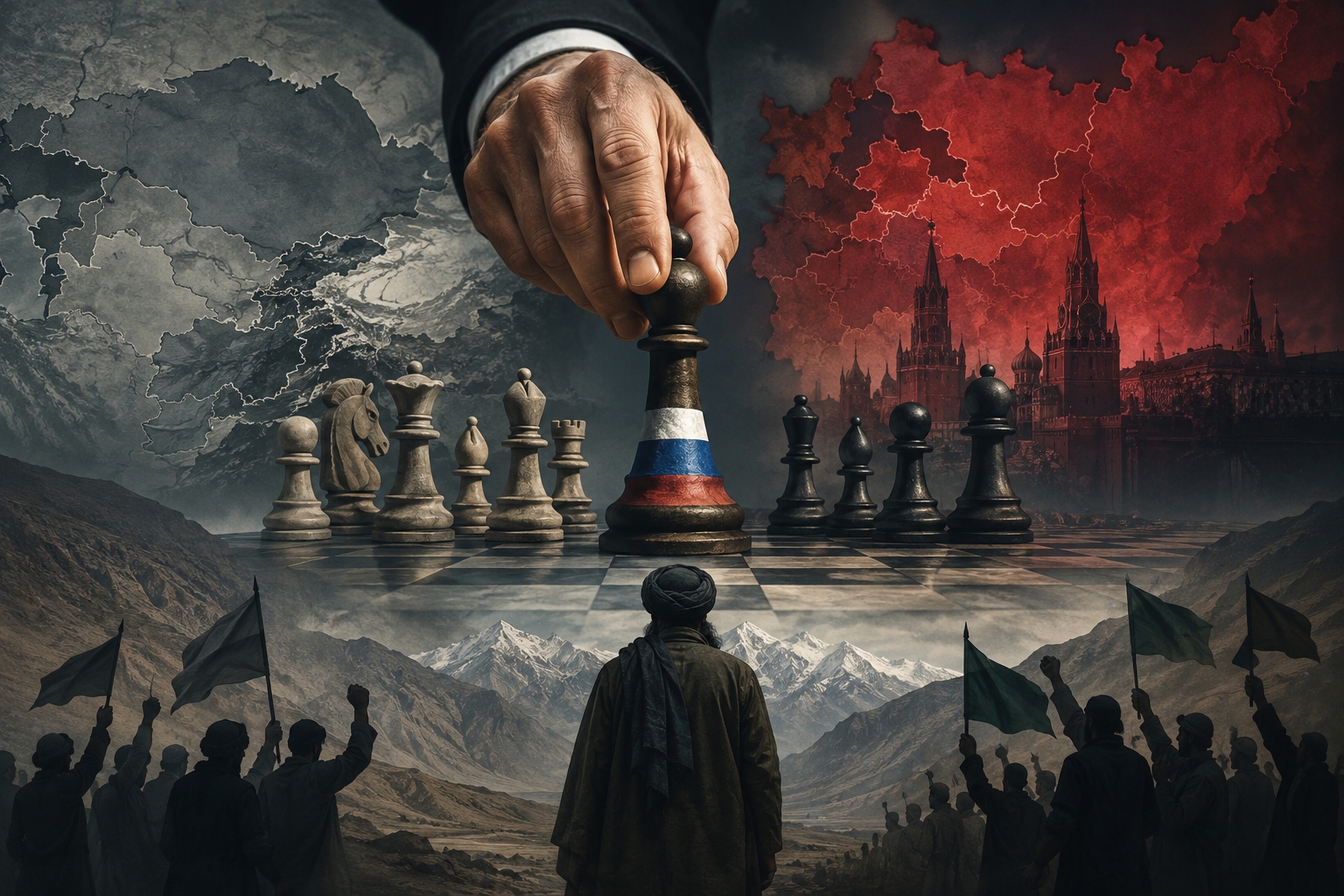
Russia and Afghanistan signed a bilateral cooperation agreement in Moscow on May 27, 2026.
The presence of Afghanistan’s Defense Minister Mohammad Yaqoob suggested that military and security issues formed a significant part of discussions.
While details of the agreement have not been fully disclosed, Moscow’s motives appear to extend beyond any immediate military gains that Afghanistan can provide.
The agreement should be understood as part of a broader Russian strategy.
It aims to manage the political future of Central Asia by preventing the emergence of powerful Islamic revival movements.
They could challenge Moscow’s influence across the former Soviet space.
At first glance, Afghanistan offers Russia little in conventional military terms.
The Taliban government has access to limited economic resources despite the country’s vast mineral wealth that remains largely untapped.
Diplomatically Afghanistan is isolated, and faces several domestic challenges both social and economic.
Yet the land-locked country occupies a unique position in the geopolitical imagination of Central Asia.
It is the only country in the region governed by an Islamic movement that successfully defeated western imperialism.
For Russia, this reality carries both risks and opportunities.
The greatest concern for Moscow is not Afghanistan itself, but the possibility that future Islamic movements in Central Asia could look to Afghanistan as a source of inspiration, legitimacy or support.
Any serious Islamic movement emerging in countries such as Tajikistan, Uzbekistan or Kyrgyzstan would naturally seek connections with a neighboring state governed by the Islamic movement.
Whether those connections would take the form of political coordination, ideological exchange, or more active support, Afghanistan would become an important factor.
By cultivating close ties with the Taliban government today, Russia seeks to shape the calculations of Afghanistan’s rulers tomorrow.
The objective is not necessarily to secure Afghan loyalty, but to create incentives for Kabul to remain neutral in the event of future political upheavals across Central Asia.
A Taliban government that enjoys diplomatic recognition, economic cooperation and security engagement with Moscow is less likely to view support for anti-Russian Islamic forces as beneficial.
This calculation is particularly important in Tajikistan, where Russia’s strategic interests are most vulnerable.
Tajikistan’s authoritarian regime is headed by President Emomali Rahmonov, a former Soviet-era communist official who has systematically suppressed Islamic political activity.
Despite decades of repression, Tajikistan possesses the strongest historical tradition of organized Islamic political opposition in Central Asia.
During the Tajik civil war, the country’s Islamic movement demonstrated that it could mobilize significant support and pose a genuine challenge to Russian-backed regimes.
While the movement was unable to topple the Moscow-backed regime in Dushanbe at the time, the social and religious forces that produced it, have not disappeared.
For Moscow, the prospect of a future Islamic resurgence in Tajikistan remains a strategic concern.
Maintaining influence in Afghanistan, therefore, becomes a form of political insurance against developments that may emerge years or even decades from now.
The agreement also serves a broader regional purpose.
Afghanistan’s relations with Pakistan have deteriorated in recent years, largely due to the Pakistani junta doing the bidding of western regimes.
This friction creates an opportunity for Moscow.
By strengthening ties with Kabul, Russia gains additional lever against Pakistan, whose military establishment has historically maintained close relations with Washington.
Russia cannot directly challenge American influence in Pakistan, but a closer relationship with Afghanistan provides Moscow with another avenue through which it can shape regional dynamics and complicate the strategic calculations of both Islamabad and its western masters.
Viewed through this lens, the May 27 agreement is less about Afghanistan’s current capabilities than about Russian anticipation of future political struggles.
Moscow is investing in influence today to ensure that if Islamic revival movements re-emerge across Central Asia tomorrow, the government in Kabul will have reasons to remain on Russia’s side.
At a minimum, Moscow wants to ensure that Afghanistan would not side with forces opposed to its interests in Central Asia.
Related Articles

Islamic revival in CIS countries alarms ruling elites and the west
Crescent International
Rabi' al-Thani 19, 1420 1999-08-01
GCC’s anticipated political quagmire in Afghanistan
Crescent International
Safar 04, 1443 2021-09-11