The Strategy of Exhaustion: Uncovering the Mechanics and Implications of the War of Attrition in West Asia
Muslim Mahmood
Dhu al-Qa'dah 22, 1447 2026-05-10
Daily News Analysis

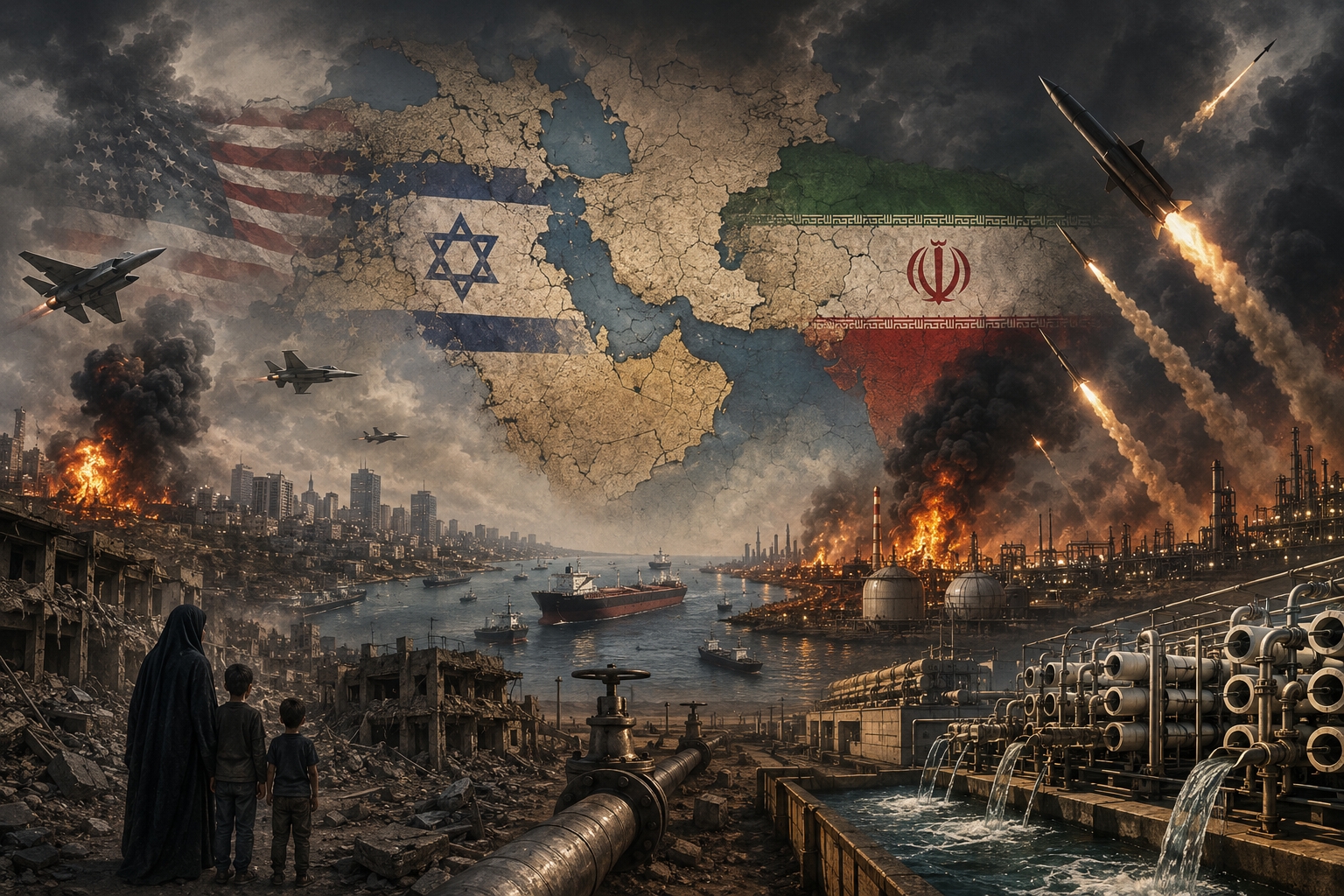
In the volatile landscape of modern geopolitics, the term “war” often conjures images of decisive battles and swift territorial conquests.
However, a more insidious and grueling form of conflict is currently shaping the future of West Asia: the war of attrition.
Derived from a Latin term meaning “to rub something away,” attrition is a military strategy where the primary objective is not a quick victory but the gradual erosion of the opponent’s strength, resources, and morale.
As an investigative look into this phenomenon reveals, the implications of this strategy extend far beyond the battlefield, threatening the economic stability and survival of states across the region.
The Historical Blueprint: 1967–1970
The concept of attrition was formally defined in the context of West Asia by Egyptian President Gamal Abdel Nasser during the late 1960s. Following the humliating defeat of Egypt in the June 1967 Six-Day War, Nasser adopted the principle that “what was taken by force must be regained by force,” launching a prolonged campaign against Israel.
This conflict, which lasted from 1968 to 1970, was characterized by artillery duels, aerial warfare, and commando raids along the Suez Canal.
Nasser’s strategy was inherently cynical; it assumed high casualties on both sides, operating on the belief that with a population more than ten times that of Israel, Egypt could endure such losses more effectively.
During this period, the Soviet Union played a critical role, re-equipping Egyptian forces and deploying fighter squadrons to assist their ally.
Although a ceasefire was eventually brokered in August 1970 via the Rogers Plan, the conflict resulted in over 10,000 Egyptian and 1,400 Israeli casualties without significant territorial changes.
This period demonstrated that attrition is often a test of endurance and resource management rather than tactical brilliance.
The Modern Framework: the US-Israel war on Iran
Today, analysts suggest a similar pattern is emerging in the confrontation involving the US, Israel and Iran.
Given the overwhelming conventional military strength of the US and Israel, Iran appears to have shifted its strategy toward survival and the imposition of unsustainable costs on its adversaries.
In this framework, the goal is to prolong the conflict until it becomes too expensive—politically, economically, and militarily—for the opposing side to continue.
Investigative findings indicate that the current conflict is entering an intense phase of missile strikes and air raids.
Military experts note that attrition can take two forms: static engagements, where forces establish flexible front lines or lay siege to an opponent, and guerrilla tactics, involving targeted strikes against an enemy’s weak points.
In the present context, Iran’s strategy relies on its ability to outlast the pressure of sanctions and military strikes while threatening the vital infrastructure of its neighbors.
Energy Infrastructure as Battlefield
A central discovery in this investigation is the potential for the conflict to escalate into the systematic destruction of regional energy infrastructure.
Credible reports suggest that Iran has been explicit about the consequences of continued aggression.
Iranian leaders have warned that they are prepared to target oil and gas facilities across Persian Gulf Arabian states, specifically mentioning the Jubail complex and Ras Tanura refinery in Saudi Arabia, the Al-Hasbah gas field in the UAE, and the Mesaieed complex in Qatar.
The logic behind these threats is grounded in a “cause and effect” relationship: if Iran’s ability to derive income from its energy sector is permanently damaged by Israeli or US strikes, it will ensure that no other country in the region remains unscathed.
This is not merely a “tit-for-tat” exchange; the objective is to “terminate the energy production capacity” of the entire region to force a global realization of the costs of war.
The impact of such a move would be catastrophic, with immediate ramifications for powers like China and India, which rely heavily on West Asian energy.
The Desalination Threat: A War for Survival
Perhaps the most alarming insight uncovered is the potential targeting of desalination plants.
In many parts of West Asia, particularly in the Gulf states and Israel, desalination is not just a utility but a necessity for human survival.
Israel, for instance, is reportedly dependent on desalination for more than 75% of its water supply.
Experts argue that destroying these facilities would represent the “eraser of a state,” as there is no “Plan B” for water in these arid regions.
For the Arabian Gulf states, many of which are monarchies with military forces largely composed of mercenaries, the loss of water and energy would lead to a total collapse of their society.
The luxury infrastructure that has come to define cities like Dubai would be eroded away as expatriates and foreigners flee a region that can no longer guarantee basic stability.
Role of Regional Players and the US
The investigation highlights a deep-seated tension between the Iranian government and the various Gulf monarchies.
Critics argue that states like Saudi Arabia and the UAE have compromised their security by allowing the US to use their territory for attacks against Iran, effectively becoming complicit in the conflict.
There is a growing sense of panic among these rulers, as evidenced by emergency diplomatic meetings in Riyadh.
The reliance on American-made missile defense systems has also come under scrutiny.
While countries like the UAE claim high interception rates, the sustainability of these defenses is questionable.
The expenditure of limited interceptor missiles to counter low-cost Iranian drones and missiles creates a math problem that favors the attacker in a long-term war of attrition.
Furthermore, there are concerns that the US would prioritize its own stockpiles or those of Israel over its Gulf allies in a sustained conflict.
Economic Consequences and Global Ripple Effects
The economic implications of this attrition strategy are already being felt by the public.
For example, fluctuations in global oil prices are a direct reflection of the perceived risk to West Asian supplies.
If Iran were to execute its threat to shut down the Strait of Hormuz completely, the impact on global trade would be unprecedented.
Iran’s control over this strategic chokepoint allows it to dictate what traffic passes through, a card it has yet to play fully but remains a potent tool of economic warfare.
For countries like China, which is currently navigating its own economic future, a disruption in West Asian energy would cause a significant “hiccup” that Russia alone may not have the capacity to mitigate through increased output.
This interconnectedness ensures that a war of attrition in West Asia is never a localized affair; it is a global crisis in the making.
The High Cost of Endurance
The “War of Attrition” in West Asia is a stark reminder that the battle is not always about winning on the field, but about outlasting the opponent over time.
Whether it is the historical precedent of the 1967–1970 conflict or the modern-day struggle between iran, Israel and the US, the strategy remains the same: to degrade the enemy’s strength until they can no longer fight.
The findings of this analysis reveal a dangerous trajectory.
The shift from targeting military assets to targeting the very foundations of human life—energy and water—marks a shift toward total war where the costs are born by entire populations.
As the states involved continue to test each other’s endurance, the world watches a high-stakes game where the ultimate prize is not territory, but survival in a region that is increasingly becoming a “test of resource management”.
In a war of attrition, there are no clear winners, only survivors who are willing to pay a higher price.
Related Articles
Iran’s Chokehold on Hormuz and Maritime Leverage Fragments US Security Umbrella
Muslim Mahmood
Dhu al-Qa'dah 08, 1447 2026-04-26
Iran, Geopolitics and closure of the Strait of Hormuz – Part II
Mohamed Ousman
Sha'ban 02, 1447 2026-01-21

Architecture Of The Invisible Battleground: Decoding The Cultural And Geographic Mechanics Of Global Collapse
Muslim Mahmood
Dhu al-Qa'dah 21, 1447 2026-05-09