Iran, Geopolitics and closure of the Strait of Hormuz – Part II
Mohamed Ousman
Sha'ban 02, 1447 2026-01-21
Daily News Analysis

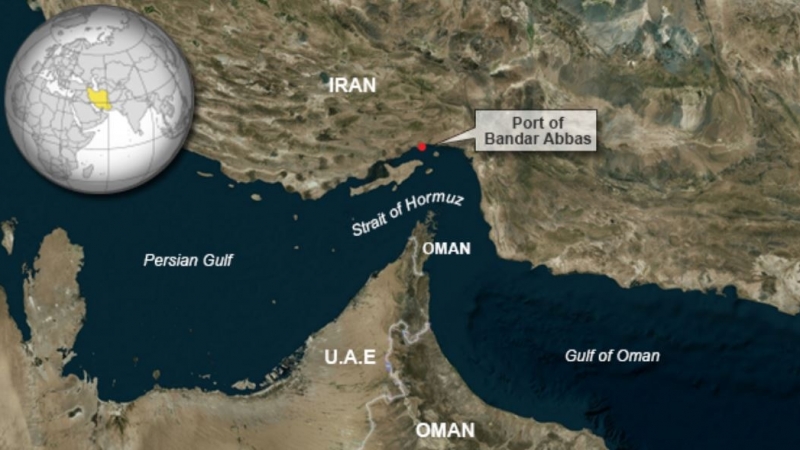
The US grab of Venezuelan oil significantly alters global energy geopolitics vis-à-vis Iran.
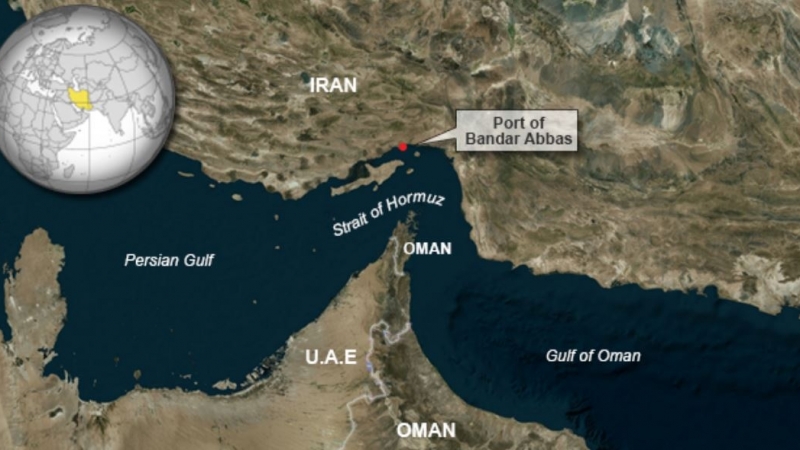
By reducing reliance on Middle Eastern supply routes, the US hopes to weaken one of Iran’s most potent levers—closure of Hormuz— historically Tehran’s strategic card in deterrence and conflict.
This structural shift has implications.
Deterrence Reduction: If Iran perceives that closing Hormuz will no longer exert crippling pressure on global markets or the US, its threat calculus may change.
Pressure on Iranian Strategy: Iran may respond by diversifying its own geopolitical alliances or pursuing alternative chokepoints and asymmetric tactics if its traditional leverage weakens.
This could include increased activity in the Gulf of Oman, cyber domains, or bolstering proxy networks to maintain strategic bargaining positions.
The optics of a US military operation in Venezuela signal to Tehran and regional actors that American strategic reach extends beyond conventional theaters.
It potentially incentivises Tehran to preemptively recalibrate its posture toward deterrence, negotiation, or asymmetric confrontation to protect its national security and regional influence.
Annotated Qur’anic Verses and Their Theoretical Application
The following verses illustrate how Muhammad al-Asī’s Qur’anic theory, Zafar Bangash’s Sirah-based interpretations, and Dr Kalim Siddiqui’s Islamic movement methodology frame resource-driven geopolitical conflicts such as Venezuela, Iraq, Libya and Iran.
1. Qur’an 28:4: Oppression, Fragmentation, and Control
Indeed, Pharaoh soared in power on earth and turned its inhabitants into factions, one of whom (the Children of Israel) he picked on by savagely killing [off] their sons and sparing [only] their women: for, behold, he was corrupt and corrupting. (The Ascendant Qur’an, Surat Al Qassas, verse 4)
Annotation and Application:
Asī frequently examines global politics through Qur’anic archetypes, especially the Fir‘awnic structure—powerful elites dividing societies and exploiting resources.
In Venezuela and West Asia, foreign powers create divisions, back rival factions, and justify intervention under claims of “stability,” “counterterrorism” or “humanitarian aid” while ultimately seeking resource control (oil, gas, strategic waterways).
Asī argues that such behavior mirrors Fir‘awnic strategies: fragment, dominate, extract, then cloak domination in moral language.
2. Qur’an 2:188: Theft through Legal and Political Mechanisms
And devour not one another’s wealth wrongfully, nor approach decision-makers with it, intending to devour sinfully, and knowingly, any amount that by right belongs to others. (The Ascendant Qur’an, Surat Al Baqarah, verse 188).
Annotation and Application:
This verse describes how power can manipulate legal institutions to justify exploitation. In the case of:
Iraq (2003–2011): US occupation dissolved Iraqi state structures, placed oil under provisional authority, and privatized extraction under new legal frameworks.
Libya (2011): NATO aggression destroyed state institutions and allowed foreign-backed militias to control oil terminals under competing political claims.
Venezuela (2026): The US assault to control oil under the rhetoric of stabilizing the economy echoes similar mechanisms.
Al-Asī would frame these as examples of outright plunder, where political language masks resource extraction.
3. Qur’an 8:60: Strategic Preparedness Against Domination
Hence, make ready against them (the mushrik enemies) whatever force and [impressive] war mounts you are able to muster, so that you might deter thereby the enemies of Allah, who are your enemies as well, and others besides them of whom you may be unaware, [but] of whom Allah is aware; and whatever you may expend in Allah’s cause shall be repaid to you in full, and you shall not be wronged. (The Ascendant Qur’an, Surat Al Anfal, verse 60).
Annotation and Application:
Zafar Bangash interprets this verse through the Sirah lens: Muslims (or any oppressed people) must prepare spiritually, intellectually and materially—but not abandon morality to mimic the oppressor.
In geopolitical terms Iran’s deterrence doctrine (ballistic missiles, regional alliances) can be seen as strategic preparation to deter invasion.
Venezuela’s alignment with Iran, China, and Russia reflected attempts to prepare alternatives to US hegemony.
However, Bangash cautions that preparedness must remain rooted in ethical clarity, not cynical realpolitik.
4. Qur’an 4:75: Duty to Resist Injustice and Defend the Oppressed
And how could you refuse to fight in the cause of Allah and of the utterly helpless men and women and children who are crying, “O our Sustainer! Lead us forth [to freedom] out of this [imperial] civic society whose people are oppressors, and raise for us, out of Your grace, a protector, and raise for us, out of Your grace, one who will bring us support!” (The Ascendant Qur’an, Surat Al Nisa’, verse 75).
Annotation and Application:
Kalim Siddiqui’s Islamic movement theory interprets this verse as a mandate to form collective structures resisting global domination. He applies it to political realities:
Iraq under sanctions (1990–2003) Suffered mass civilian deaths framed as “containment.”
Libya post-NATO was fragmented and exploited by militias backed by foreign powers.
Iran facing sanctions and threats responds by cultivating alliances and alternative trade arrangements.
Siddiqui’s approach emphasizes that resistance must be systemic, unified, ideological, not reactionary or fragmented.
Comparative Case Studies in Resource-Driven Conflicts
Case Study 1: Iraq (2003 Invasion and Aftermath)
Iraq possessed the world’s fifth-largest oil reserves.
Key Patterns Relevant to Venezuela/Iran: Military Intervention + Resource Privatization
After the 2003 invasion, US and British companies gained favorable access to Iraqi oil fields under new laws crafted during occupation.
State Fragmentation: Sectarian divisions were intensified, aligning with verse 4 of Surat Al Qassas model of imperial fragmentation.
Reduced Regional Leverage: Iraq’s weakened state reduced resistance capacity to US regional strategy.
- Increased Washington’s maneuverability against Iran.
Theoretical Interpretation:
- Imperial domination cloaked in democracy rhetoric.
- Absence of ideological independence led to foreign manipulation.
- Showcased consequences of lacking unified Islamic political organization.
Case Study 2: Libya (2011 NATO Attack)
Libya held Africa’s largest proven oil reserves.
Key Patterns Relevant to Venezuela/Iran:
Destruction of Centralized Authority: NATO airstrikes toppled the state but left a power vacuum filled by competing militias.
Fragmented Oil Control: Local warlords seized terminals, and foreign actors backed different factions for favorable contracts.
Geopolitical Signalling: The west demonstrated willingness to use force to grab energy sources under humanitarian pretexts.
Theoretical Interpretation:
- Another example of hegemonic patterns hidden under moral narratives.
- Illustrates danger of lacking ideological unity before engaging global powers.
- Highlights urgent need for systemic Islamic political coherence.
Through al-Asī’s Qur’anic critique, Bangash’s Sirah ethical prioritization, and Siddiqui’s Islamic movement orientation, the US takeover of Venezuelan oil must be contextualized as part of a deeper struggle between hegemonic power structures and movements for autonomy, justice, and moral coherence.
Geopolitically, this move reframes energy security calculations around the Strait of Hormuz, influencing Iran’s strategic options and the broader matrix of US-Israel-Iran tensions.
The analysis reveals that beyond immediate tactical gains, such geopolitical shifts must be read in light of structural patterns of domination and resistance that shape the modern world order.
Bibliography
Al-Āsī, Muhammad: The Ascendant Qur’an: Realigning Man to the Divine Power Culture. Various Volumes. Institute of Contemporary Islamic Thought (ICIT). (2008-2021).
Bangash, Zafar: Power Manifestations of the Sirah. Toronto: ICIT. (2011).
Bangash, Zafar: Editorial introduction to Siddiqui’s collected works
Bangash, Zafar: In Pursuit of the Power of Islam: Major Writings of Kalim Siddiqui. Toronto: The Open Press (1996).
Bangash, Zafar: Articles in Crescent International (various issues)
https://crescent.icit-digital.org/articles/power-dimensions-in-the-sirah-of-the-noble-messenger-saws
https://crescent.icit-digital.org/articles/the-importance-of-re-examining-the-seerah-of-the-prophet
Siddiqui, Kalim: Stages of Islamic Revolution. London: The Open Press, (1996).
Siddiqui, Kalim: The Islamic Movement: A Systems Approach. London: The Muslim Institute, 1976.
Siddiqui, Kalim: Issues in the Islamic Movement. Toronto: The Open Press (1982).
Related Articles
The Strategy of Exhaustion: Uncovering the Mechanics and Implications of the War of Attrition in West Asia
Muslim Mahmood
Dhu al-Qa'dah 22, 1447 2026-05-10
From Caracas to Hormuz: Resource Geopolitics through the Qur’anic Lens - Part – I
Mohamed Ousman
Rajab 19, 1447 2026-01-08
Iran’s Chokehold on Hormuz and Maritime Leverage Fragments US Security Umbrella
Muslim Mahmood
Dhu al-Qa'dah 08, 1447 2026-04-26