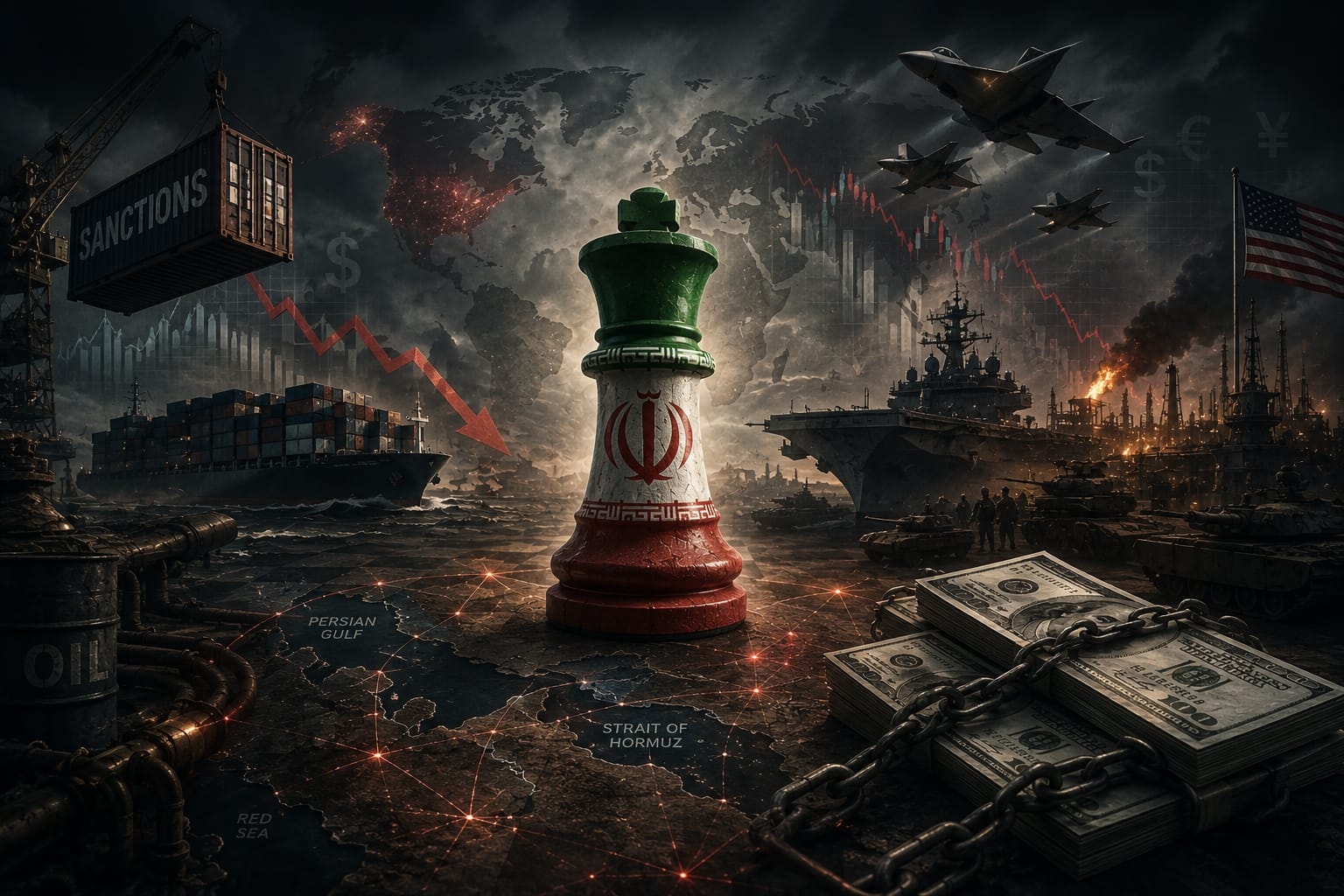
Why Islamic Iran Will Now Strike More Boldly Across the Region
Empowering Weak & OppressedCrescent International
Dhu al-Hijjah 01, 1447 2026-05-18
Daily News Analysis

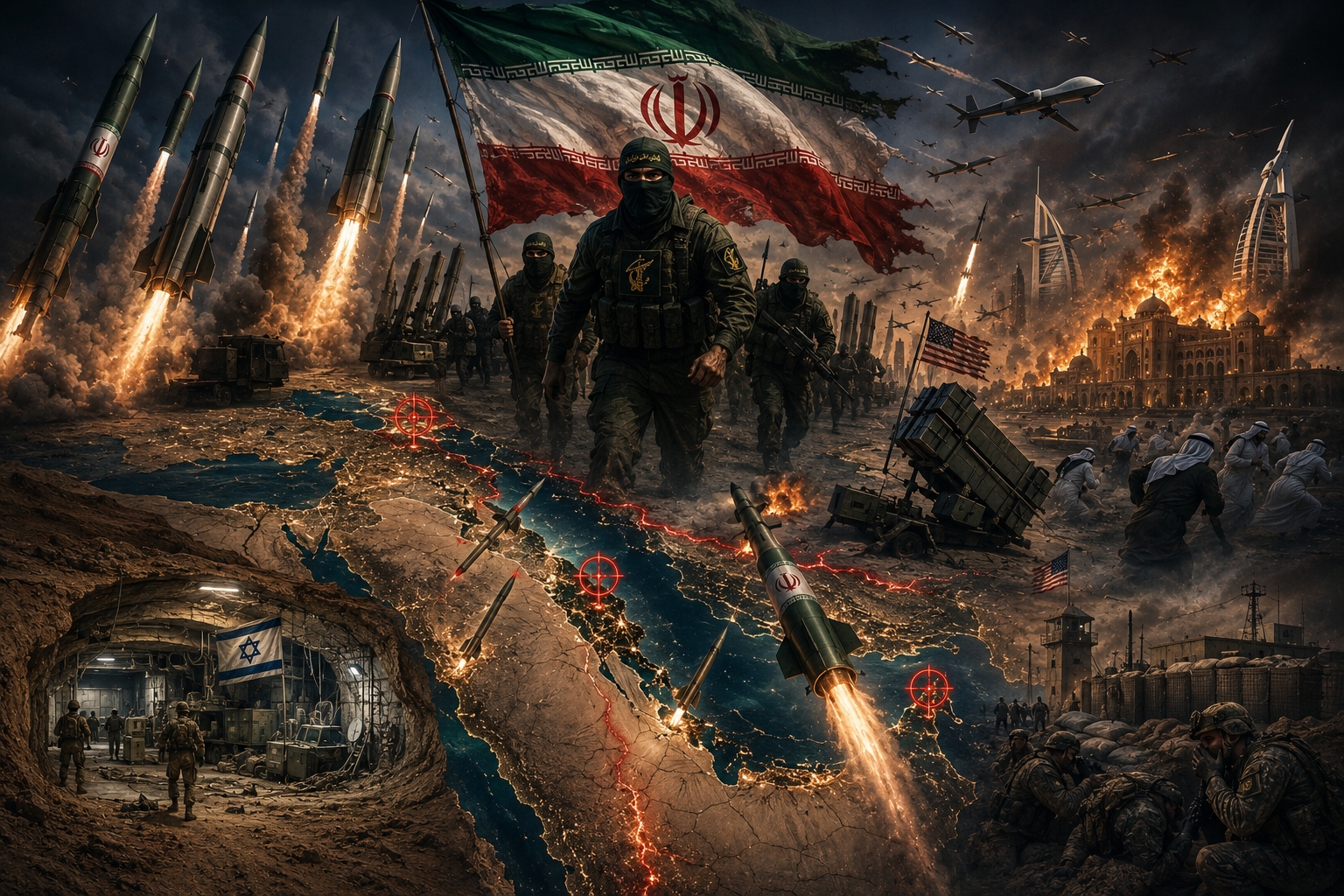
The US-zionist aggression against Iran did more than escalate military tensions across West Asia.
It fundamentally transformed Tehran’s approach towards the regional order itself.
For years, Islamic Iran maintained a soft approach towards western-backed dictatorial regimes when confronting American and Israeli pressure.
Tehran made sure there was a level of respect for the formal sovereignty of neighboring Arab states.
Even when these western-backed Arabian regimes aligned themselves with Washington, Islamic Iran avoided treating them as its principal enemies.
It also refrained from conducting largescale retaliatory strikes inside their territory.
This approach is no longer applicable.
The Ramadan War exposed what Iran knew for years: western-installed regimes either willingly enabled the US-Israeli campaign against Iran or lacked the agency to prevent their territory from being transformed into operational platforms for foreign powers.
The most revealing development was the disclosure that Israeli forces, in coordination with the US, secretly established a military outpost deep inside Iraq’s western desert before launching the war on February 28.
The base reportedly housed Israeli forces, served as a logistics hub for the Israeli Air Force, and hosted rescue teams for downed Israeli pilots.
Iraqi soldiers who approached the site after a farmer noticed suspicious military activity were reportedly fired upon, killing one Iraqi soldier and wounding two others.
The implications are enormous.
Iraq — a country whose parliament has repeatedly demanded reduction in foreign military presence—was unknowingly hosting a covert Israeli military installation used to attack a neighboring Muslim state.
Even more significant was Baghdad’s inability to detect or prevent the operation until Iraqi soldiers were alerted by a farmer who noticed suspicious military activity.
The farmer, Awad al-Shammari, was killed in an Israeli helicopter strike, according to the Middle East Eye, quoting the New York Times.
For Tehran, this confirms that many regional countries no longer possess meaningful strategic sovereignty independent of American and Israeli influence.
And these monarchies only reinforced this perception during the war.
Israel transferred Iron Dome batteries and military personnel into the UAE, marking the first deployment of the system outside Israel and the US.
Israeli and Emirati officials coordinated closely throughout the war while Iranian missiles and drones struck targets across the western shores of the Persian Gulf.
The zionist-UAE cooperation was not symbolic.
Israeli troops were physically deployed on Emirati and Iraqi soil operating advanced military systems against Iran.
Israeli aircraft also conducted strikes in southern Iran specifically to prevent attacks on the Arabian entities.
From Tehran’s perspective, the distinction between “neutral” regional regimes and active participants in the anti-Iran alliance has now disappeared.
More importantly, Iran has learned that these regimes lack both the willingness and capability to exercise their sovereignty against Washington and Israel.
For Tehran, this reality removes many previous constraints.
Prior to February 2026, Tehran avoided action that could directly embarrass or destabilize these regimes because it still viewed them as formally sovereign actors.
But the Ramadan War has fundamentally altered this now outdated approach.
If regional regimes cannot prevent Israel from secretly building military facilities on their territory, cannot prevent their airspace and infrastructure from being integrated into attacks on Iran, and cannot even secure meaningful protection from their western allies, Tehran no longer sees any reason to maintain earlier diplomatic sensitivities.
This does not mean Iran will pursue reckless escalation.
But it does mean Tehran is likely to adopt a far more direct and uncompromising posture.
The old framework — where Iran distinguished between hostile western powers and formally sovereign neighboring states—has largely collapsed.
Tehran increasingly views the region as a deeply penetrated security architecture subordinated to US and zionist interests.
This perception changes the rules of confrontation.
Military infrastructure, intelligence networks, logistical corridors, and covert facilities across the region will now be treated by Iran not as protected sovereign spaces, but as legitimate components of the battlefield.
In essence, the war dissolved many of the political boundaries Tehran once tried to preserve.
By allowing foreign powers to transform regional territory into operational platforms against Iran, these regimes have, in Tehran’s eyes, forfeited the sovereignty they previously demanded others to respect.
And once this principle disappeared, the regional order has now untied Iran’s hands.
This is a reality even the US and Israeli elites are beginning to regret.
Related Articles
GCC Regimes and the End of US-Israel Protection Myth
Crescent International
Shawwal 07, 1447 2026-03-26
Economic cost to empire: How the Ramadan war deepens Western decline
Crescent International
Ramadan 19, 1447 2026-03-09

No Real “Deal”; Only a Temporary Truce and Long-Term Conflict
Crescent International
Dhu al-Hijjah 16, 1447 2026-06-02