Pakistan Army has Learnt No Lessons From The December 1971 Debacle
Developing Just LeadershipZia Sarhadi
Jumada' al-Akhirah 21, 1448 2026-12-01
News & Analysis

by Zia Sarhadi (News & Analysis, Crescent International Vol. 56, No. 10, Jumada' al-Akhirah, 1448)
December 16 marks a dark chapter in Pakistan’s chequered history. On this day in 1971, some 93,000 Pakistani troops surrendered to the invading Indian army in Dhaka in what was then East Pakistan. This was the largest number of troops who surrendered anywhere in the world since the Second World War.
It led to the creation of Bangladesh. Pakistani troops were held as Prisoners of War (PoW) in Indian camps. They started to be repatriated from mid-1973 following the Simla Agreement signed between ‘President’ Zulfiqar Ali Bhutto and Indian Prime Minister Indira Gandhi in July 1972. The last batch of soldiers returned to Pakistan in April 1974.
Before we consider what led to this shameful episode, it would be reasonable to assume that the army would show some contrition for its cowardly conduct. Perish the thought.
Pakistanis, especially the generals, refuse to learn any lessons from their blunders. That is why they keep repeating them, as we witness in Balochistan and KPK today.
The one lesson they learned from that debacle is the wrong one: that East Pakistan was separated from West Pakistan by 1,000 miles of hostile Indian territory. No relief supplies could be sent to the beleaguered army there.
While technically correct, the question is, who put the army in such a predicament and why was it necessary to launch a military operation against the people of East Pakistan? They had given a clear mandate to the Awami League, a party led by Sheikh Mujibur Rahman in the general elections of December 7, 1970. The Awami League had the legal right to rule Pakistan.
Mujib’s Awami League had won an absolute majority in the National Assembly. His party secured 160 out of 162 seats plus seven seats reserved for women (all of them from East Pakistan) in the 300-seat assembly (total 313 with the 13 reserved seats for women added).
In West Pakistan, the Pakistan People’s Party (PPP) of Zulfiqar Ali Bhutto won 81 seats plus five seats for women. Based on population, West Pakistan’s total seats in the national assembly were 138.
This should have automatically led to power being handed over to the Awami League. Sheikh Mujib would have become the country’s first democratically elected prime minister but Bhutto conspired with then president, General Yahya Khan to subvert the people’s mandate.
It was not difficult for Bhutto to do so given the deep-seated racism against the Bengalis whom the West Pakistani elite considered inferior. Bhutto pushed the canard that Mujib was a “traitor” and an Indian agent. Yahya bought into this allegation.
The Awami League chief had already been accused of hatching the ‘Agartala Conspiracy’ to break-up Pakistan during Ayub Khan’s presidency. It was common at that time to accuse political opponents of “treachery” if they criticized the strongman.
Thick-headed generals like Yahya, Hamid, Pirzada et al, and opportunist politicians like Bhutto and his ilk were adamant that they will not hand over power to the legally elected representatives of the people because they were from East Pakistan.
The military operation launched in March 1971 was brutal. It resulted in the killing of some 300,000 Bengalis, most of them civilians.
This figure is hotly contested. The Bengalis say three million people were killed; the army insists a much smaller number died. Whatever the actual number of people killed—all were innocent Pakistani citizens. They were murdered by an army that claimed to protect them. Even one Bengali killed was one too many.
The army had no right to kill its own citizens. The allegations the generals and their sycophants made against the Bengalis were false. They were not plotting to breakup Pakistan. Their demand that power be handed over to them was legal and legitimate.
Yahya Khan had no legal authority to unleash the army on innocent citizens. The army action, backed by a majority of politicians in West Pakistan, was based on racism towards the Bengalis even though they constituted a majority.
The question that many observers have asked is: was there no other way—less brutal and bloody—to resolve the crisis that erupted—nay created by the generals and Bhutto—after the December 1970 general elections?
True, most Pakistanis would rather forget the debacle of December 16, 1971 but history cannot be wished away. The narrative spun around this debacle is that it was all India’s fault, led by that wicked woman Indira Gandhi.
India is the traditional enemy of Pakistan. Expecting any better from it is a sign of insanity. The question is: why create conditions that India can exploit? Did India force the Pakistan army to murder its own citizens in East Pakistan?
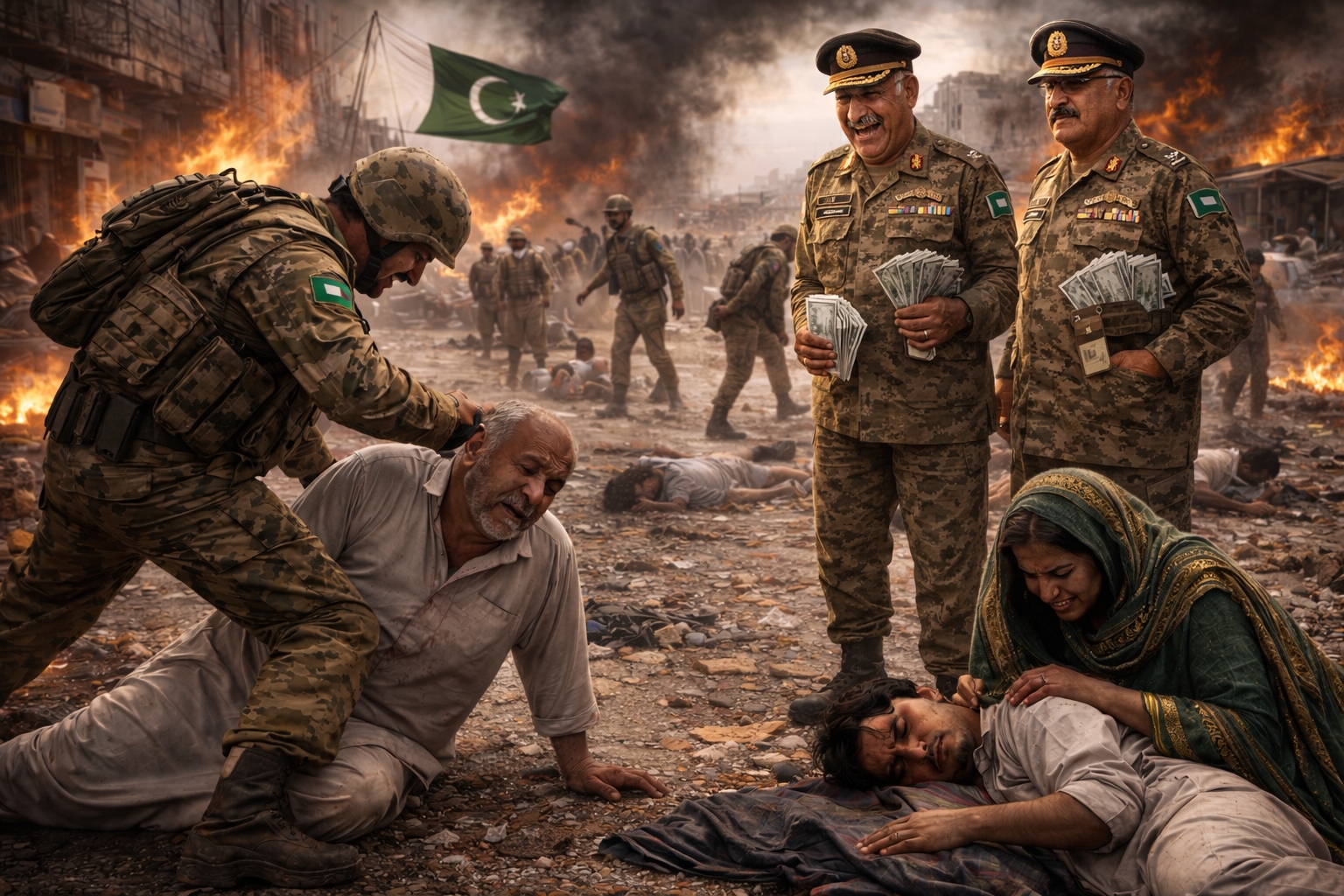
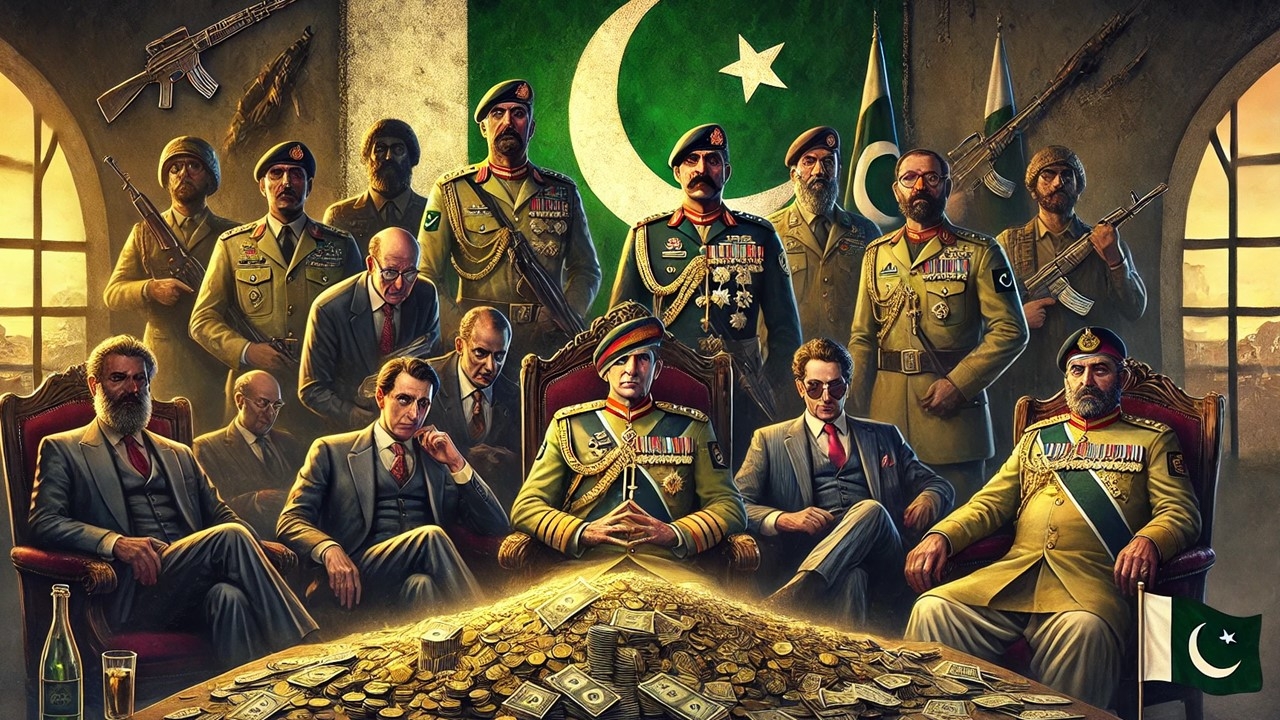
The people of Pakistan continue to suffer at the hands of a brutal army that acts as an occupation force. The corrupt generals have become billionaires. They have bought properties abroad: In North America, Europe and Australia while wrapping themselves up in the cloak of patriotism.
The army is not there to protect Pakistan or its people. This should be obvious even to the most dumb-witted, despite the myth peddled otherwise.
The army has also indulged in revionist history. For instance, on November 23, 2021, then army chief, General Qamar Javed Bajwa made the astonishing claim that there were only 34,000 troops in East Pakistan. He was speaking on the occasion of Martyrs Day at the GHQ in Rawalpindi. He further claimed, quite incredulously, that it was a ‘political’ rather than a military defeat.
How did the surrender of 93,000 Pakistani troops to the invading Indian army become a ‘political’ defeat? It seems Bajwa made a Freudian slip: the army has always been involved in politics, despite its denial to the contrary. General Yahya was the president at the time.
That no general or politician has been held accountable for the 1971 disaster speaks volumes for what is wrong with Pakistan. While the shame of December 1971 cannot be washed away, holding those responsible for it would provide some satisfaction to the people that the culprits have been punished.
Without accountability for such major crimes, Pakistan can never make progress. Its present predicament provides ample proof of this truism.
Related Articles