Saudi-backed mercenaries flee from Bab al-Mandeb as Ansar-Allah head for Aden
Crescent International
Jumada' al-Akhirah 05, 1448 2026-11-15
Daily News Analysis


The Ansar-Allah have delivered another blow to the Saudi-backed mercenaries in Yemen.
They have driven the so-called internationally recognised government’s forces from the Bab al-Mandeb Strait and other key coastal areas.
The Qatari-regime financed outlet, Al Jazeera tactfully described it as the “repositioning” of troops.
It is another major development in the Ansar-Allah’s strategy to liberate virtually the whole of Yemen from the Saudi-backed mercenaries.
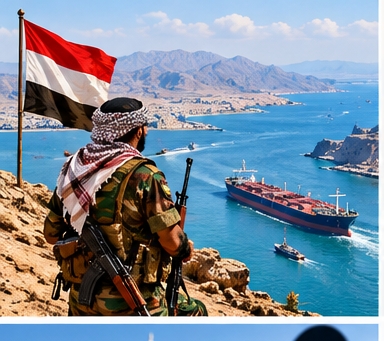
By taking control of Bab al-Mandeb, the Ansar-Allah have cut off the supply route of the mercenary forces along the Red Sea coastline.
This forced the mercenaries to flee from Bab al-Mandeb, the Dhubab district, the airport of Dhubab and various areas in the Lahij Governorate.
The Ansar-Allah have also surrounded Taiz, Yemen’s third largest city.
All supply routes into the city have been blocked.
In order to soften the blow of their defeat, officials of the mercenary regime claimed their forces were “repositioning” to try to defend Aden.
Why Aden matters?
It is the Saudi-backed mercenary regime’s temporary capital.
With almost all so-called officials of this regime living in hotels in Riyadh, Aden still carries symbolic significance.
The Ansar-Allah drove the Saudi-backed mercenaries from Sana‘a back in 2014 that led to the Saudi-Emirati attack on Yemen in March 2015.
It was supposed to be a few days’, or at most a few weeks’ operation before the Saudi-Emirati bombing raids would drive the Ansar-Allah from Sana‘a.
The aggressors’ attacks were also backed by the US, Britain and France as well as mercenaries from South America and Africa.
After seven years of relentless bombing and a tight siege of Yemen preventing food and medicines from reaching the people living in areas under Ansar-Allah control, but unable to defeat the Ansar-Allah, the Saudis sued for peace through the UN.
That went into effect in April 2022.
Under the deal, the Saudis not only agreed to a ceasefire but were also required to lift the siege of Yemen and pay the salaries of government employees.
Compensation was also supposed to be paid to Ansar-Allah.
True to their trecherous nature, the Bani Saud refused to honour these pledges.
The seven-year war and bombings killed nearly 500,000 people in Ansar-Allah-controlled areas.
More than a million children were affliced by cholera because of lack of medicines.
The Bani Saud then broke the ceasefire by attacking Sana‘a airport on July 13, 2026, destroying the runway.
This prevented a Mahan Air flight from Tehran bringing a Yemeni delegation that had gone to attend Iran Supreme Leader, Imam Khamenei’s funeral, from landing in Sana‘a.
The Ansar-Allah were furious.
They vowed to retaliate against this latest Saudi aggression.
They targeted a number of Saudi airports including Abha, Riyadh and Dammam.
Then on September 9, they launched lighting strikes at the mercenaries’ positions along the Red Sea coast liberating more than 5400 kms of territory in three days.
Despite possessing massive amounts of weapons, the mercenaries fled when the Ansar-Allah attacked them.
The Saudis also renewed their aerial bombing campaign killing civilians.
At least 2,000 sorties have been carried out.
The Bani Saud’s de facto ruler, Muhammad bin Salman (MbS) immediately begged Donald Trump for help.
The US president rebuffed him.
He then turned to Pakistan and Turkiye.
While the two countries entered into a defence agreement, they have not committed ground troops to the war against Ansar-Allah.
Egypt has also pledged to “defend” brotherly Saudi Arabia.
Why doesn’t this brotherhood extend to Yemen?
They are also Arabs, although the poorest of them.
All the regimes that have entered into alliances with Saudi Arabia are there to make money.
And now that the Ansar-Allah are poised to liberate Aden, what will the Bani Saud’s allies do?
With Ansar-Allah’s liberation of Aden appearing increasingly likely, the game would up for the Saudi-backed mercenaries as well as the Saudis.
At least 80% of Yemen’s population resides in areas under Ansar-Allah control.
If they liberate Aden, virtually the entire population will be with the Ansar-Allah.
Can the Bani Saud—and the rest of the world—continue to maintain the fiction that the so-called ‘internationally-recognized government’ is the legitimate government of Yemen?
Related Articles

Yemenis, allies and supporters hold mass rallies to condemn Saudi-led war of aggression
Crescent International
Sha'ban 24, 1443 2022-03-27

Yemen’s Asymmetric Power: From Northern Uprising to Regional Actor
Muslim Mahmood
Jumada' al-Ula' 02, 1448 2026-10-13