No Real “Deal”; Only a Temporary Truce and Long-Term Conflict
Empowering Weak & OppressedCrescent International
Dhu al-Hijjah 16, 1447 2026-06-02
Daily News Analysis

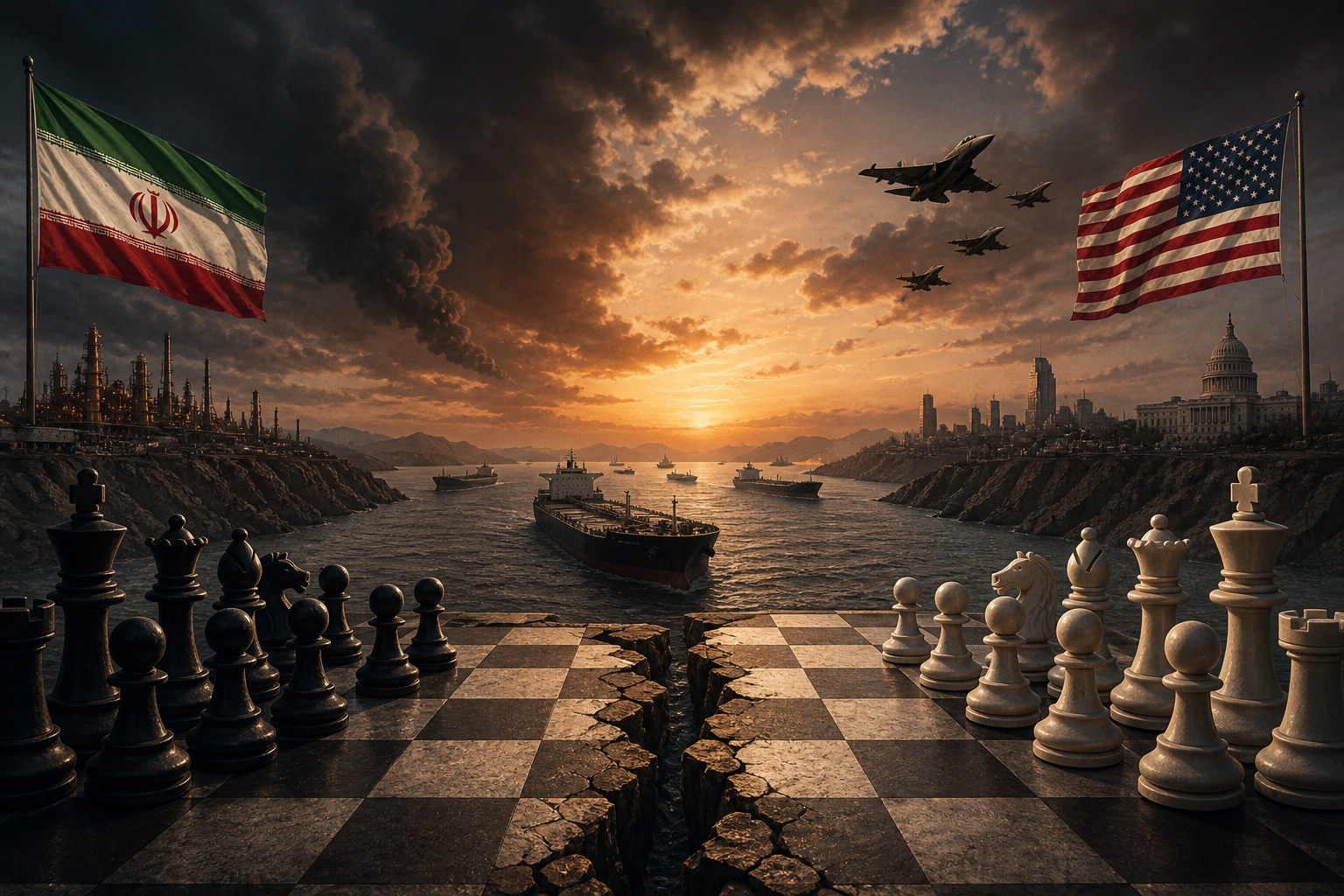
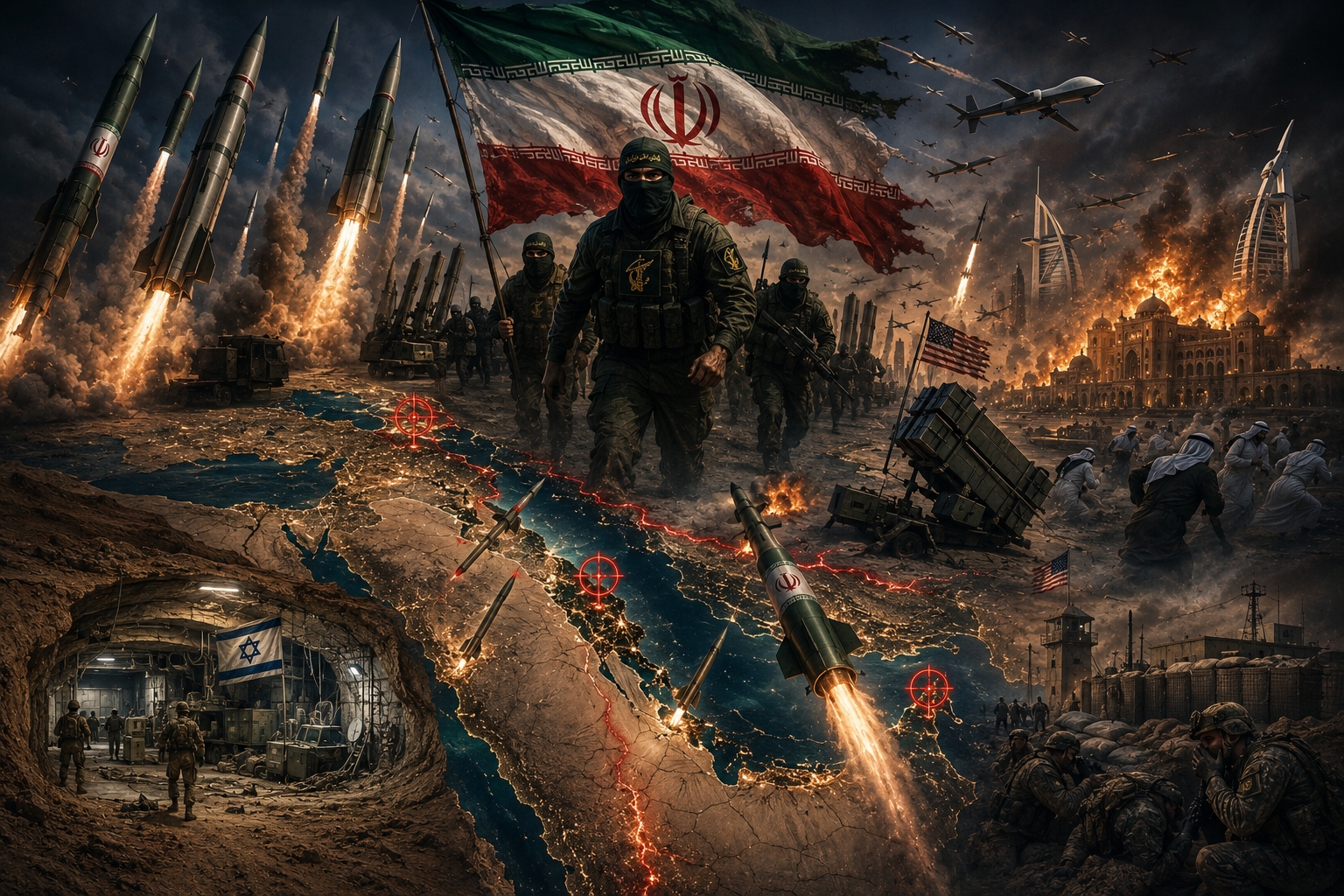
A temporary freeze in direct hostilities between Iran, the US, and Israel does not mean the end of war.
It will be merely an intermission.
Behind the language of diplomacy and de-escalation lies a deeper strategic reality: none of the parties involved believes the underlying confrontation can be resolved in the near future.
All of them are already preparing for the next phase.
The central misconception promoted by western regimes is that ceasefires and negotiated arrangements automatically create pathways toward stability.
This is not the case.
The ongoing mass murder in Gaza since the “ceasefire” is ample proof.
Every temporary agreement merely buys time for military recalibration, political repositioning, and strategic adaptation.
The conflict is no longer centered on isolated disputes over nuclear enrichment or regional influence.
It has evolved into a direct struggle over the balance of power in West Asia and the global order.
For Israel, every ceasefire is tactical.
The genocidal regime’s long-term security doctrine has consistently relied on military brutality, regional chaos and preventing the emergence of any state capable of imposing deterrence against the zionist regime.
Iran’s growing missile capabilities, expanding regional alliances, and willingness to engage more directly have fundamentally altered that equation.
Israeli planners understand that time does not favor them.
As a result, any pause in conflict is likely viewed not as peace, but as an opportunity to regroup before another confrontation.
Also, from the perspective of sections of the US establishment, Trump’s approach has exposed the strategic limitations of US power.
American bases and regime officials are no longer “untouchable.”
By destroying a majority of US military bases in West Asia, Islamic Iran has completely obliterated Washington’s deterrent power and its global hegemonic status.
This is why the political timing inside the US matters.
The zionist regime is aware that Donald Trump and the broader MAGA current may not remain in power for more than two more years.
While Trump has at various times rhetorically positioned himself as anti-war, his regime demonstrates extreme hostility toward Iran through sanctions, covert operations, and regional war.
This has divided MAGA as a coherent political movement opening the door to the White House for “democrats.”
A future “democratic” regime is unlikely to reverse the strategic direction established under Trump.
In fact, it may intensify it.
The pattern already exists throughout recent American political history.
When Barack Obama became president, he inherited the occupations of Iraq and Afghanistan.
Although Obama campaigned on restoring diplomacy and reversing the excesses of the Bush era, Afghanistan remained under US occupation throughout his regime.
Obama dramatically expanded drone strike operations across multiple countries, institutionalizing targeted killings as a normalized instrument of US foreign policy.
Guantanamo Bay, despite repeated promises, was never closed.
The lesson from that period is important.
American regimes often change the language, branding, and presentation of imperial power without fundamentally dismantling the underlying structures.
Policies become more sophisticated and better packaged rhetorically, but the strategic objectives and the brutal tactics remain remarkably consistent.
The same continuity was visible after Trump’s first presidency.
When Joe Biden took over, many observers predicted a rollback of Trump-era confrontational approach toward China and Iran.
Instead, the Biden regime largely preserved the architecture of economic pressure, strategic containment, and geopolitical rivalry.
Tariffs against China remained.
Military posturing in Asia expanded.
Sanctions against Iran continued.
The continuity demonstrated that hostility toward rival powers is not merely a Republican project; it is embedded within the broader bipartisan consensus of the American empire.
The same logic will likely shape Washington’s future posture toward Iran after Trump.
Democrats will not interpret the recent confrontation as proof that escalation was wrong.
Rather, many within the foreign policy establishment will argue that Trump did not manage the confrontation properly.
They will claim he lacked discipline, alienated allies, failed to construct sustainable coalitions, and approached strategic warfare like a media spectacle rather than a coherent long-term policy.
From that perspective, the lesson for the next US regime will not be restraint, but improved execution.
In practical terms, this means Trump-era policies are unlikely to end.
They will instead be refined, institutionalized, and politically camouflaged behind the language of multilateralism, humanitarian concern, and “rules-based order.”
The methods may become more sophisticated, but the confrontation will continue.
That reality dramatically reduces the credibility of any long-term diplomatic settlement.
The Islamic leadership of Iran has also undergone a strategic transformation.
For years, Tehran attempted calibrated restraint: measured responses, indirect deterrence, and carefully managed escalation designed to avoid full-scale war with the US and Israel.
Yet repeated assassinations, sabotage campaigns, sanctions, and military strikes have reinforced the conclusion inside Iran’s political and military establishment that restraint does not fundamentally alter Washington’s brutal policies.
The perception now taking hold in Tehran is that compromise merely delays confrontation while giving adversaries additional opportunities to weaken Iran from within.
Consequently, Tehran is increasingly shifting toward a doctrine centered on overt deterrence and demonstrated retaliatory capacity.
The psychological barrier against direct confrontation has already been breached.
There is nothing left in the US and zionist arsenals which Iran has not seen and was not able to pushback.
The next confrontation, when it comes, is unlikely to resemble previous shadow conflicts fought through proxies and deniable operations.
The trajectory now points increasingly toward direct engagement, broader regional spillover, and a much harsher level of destruction.
Islamic Iran no longer appears interested solely in surviving pressure; it increasingly seeks to impose massive costs on the US and Israel, openly and visibly.
Meanwhile, Israel and sections of the US establishment appear equally convinced that failing to decisively confront Iran now could permanently weaken western dominance across the region.
In that sense, any so called “ceasefire” does not signal the end of a war.
It merely signals the beginning of preparation for a more dangerous one.
Related Articles
America Wants Economic War; Iran Will Make It a Wider War
Crescent International
Rabi' al-Awwal 06, 1448 2026-08-19
Economic cost to empire: How the Ramadan war deepens Western decline
Crescent International
Ramadan 19, 1447 2026-03-09